Review of Into the Water, by Paula Hawkins

d12-07-30 C to H walk (14)

Since I had the good fortunate to discover The Girl on the Train before its surge of popularity this side of the pond, & loved it, I’ve felt a proprietary interest in Paula Hawkins. Even before my copy of Into the Water arrived, I was eager to find out how it would be received & @ this point reception seems mixed. If I can divide readers into categories they seem to be: those who liked TGOTT and were disappointed; those who disliked TGOTT & found this one better; & I think a minority to which I have the honour to belong who loved both, but were delighted to enjoy each for its differences. What made me love TGOTT was the sympathetic treatment of the principal character Rachel – with whom I found it easy to identify – & varied but distinctive personalities of the other two narrators. All three came through nicely on audio. Granted, the plot wasn’t particularly original, but there was enough ambiguity to keep me going, especially as I cared enough about Megan and Rachel to want to know what happened to the former & what would happen to the latter.

This one is quite different. Most of the narrators varied from unattractive to repulsive. The only two I unreservedly liked were Erin the police officer and Lena the teenager (I can imagine Emily Blunt @ the age she played Tamsin as Lena), who was the only one I really admired, both for character & physical courage. The principal male characters were weak and contemptible: two policemen, Sean & Patrick (father & son) & Mark, a schoolmaster. The other women narrators: Nickie, literally an old witch; Jules, sister of Nel the apparent suicide; Lousie, mother of Katie, Lenia’s BF & another apparent suicide; & Helen, headmistress & wife of Sean, are all quite unpleasant. But as a reader who finds ‘I didn’t like the characters’ no basis of an intelligent bad review, I didn’t think their being unpleasant meant they didn’t hold my interest, especially Jules – who began to show signs of scrubbing up well – & Nickie, whose paranormal abilities gave the story a depth of feeling & historical connexion, both recent & ancient.

I loved Lena for her unswerving loyalty to her BF Katie, whose own courage in secret keeping awed me as well. Many readers will find their constancy misplaced, but that is the beauty of tragedy: keeping your commitments however unworthy the objects and unfortunate the consequences. (Ask Antigone.) That Paula Hawkins went so against type in her characterisations was pleasingly original as well. Usually when a character has a senior retired police officer for a parent, he’s model of old-fashioned integrity & an inspiration, who passes those qualities on to his offspring. Not here.

It’s not a perfect book. The backstory about witch-dunking never really worked for me, nor did the setting quite get into focus, altho’ that may be my fault. I’d imagine the town of Beckford was based on Hexham: I’d so like to revisit Northumberland (& for God’s-sake – if this one is made into a film, don’t let Hollywood ruin the setting like they did with TGOTT!). Also, it was sometimes hard to discern the main plot: was it what happened to Nel, or to Katie, or even events in 1983 or 1922 or the 17th century. Also I didn’t really believe the cause of estrangement between Jules & Nel. Misunderstanding like that occur, but they usually get sorted out, or we’d all hate each other forever. But it was worth the initial confusion in clarifying the various narrators & ambiguities & gratifying that Paula Hawkins could follow up her first thriller with something so original & engaging as Into the Water.

Review of Falling Creatures, by Katherine Stansfield

CBDF50D4-B553-4334-BB23-348F54D2C635

The flavour of Katherine Stansfield’s book reminded me so of Emma Donoghue’s. Both are set in remote corners of the United Kingdom during the reign of Victoria: Ireland in The Wonder and Cornwall in Falling Creatures. (We too often forget that the Cornish are not English.) Both feature a central character mired (literally too) in a slough of toxic religiosity: Roman Catholic and Methodist chapel respectively. But this is a simpler story & I expect most readers would find it less ‘literary’ (whatever that means) than The Wonder. Personally I found the absence of bizarre OTT RC practices made Falling Creatures more accessible. Fortunately the narrator believes in the traditional magic just enough to add the right spooky touch. She a farm servant girl, the best friend and lover of Catherine Dymond, the murder victim. The word ‘lesbian’ hadn’t been invented then & I liked how she doesn’t regard their attachment as anything unusual. The narrator is called “Shilly” (short of “shilly-shally”) by her farm mistress, we find out her real name only @ the end. Catherine is found in a turfy mire with her throat cut, and Matthew, a farm servant is accused of the murder.

I found the settings superbly done, without too much description but with a feel for the landscape and the interiors, especially the smoky tavern that’s the setting for the trial. The characters vary in social class from gentleman and magistrate down to servants, & are placed easily by their characteristics. ‘Mr Williams’ – who appears initially @ the trial in the guise of a newspaper reporter from London, reminded me a bit too much of Lib in The Wonder as being presented anachronistically in the story more to appeal to readers today than realistically fitting the period. But I am very hard to please as a reader of historicals. Otherwise seemed a very attractive character & appropriately good at disguises.

This book sticks much closer to its original source than The Wonder. Tho’ both Williams and Shilly are invented characters, the rest of the story including the outcome of the trial are based on fact. But it’s an excellent story, the setting is well-rendered, & sometimes very eerie – especially the ponies drowning in the peat bog.

Review of Dead Woman Walking, by Sharon Bolton


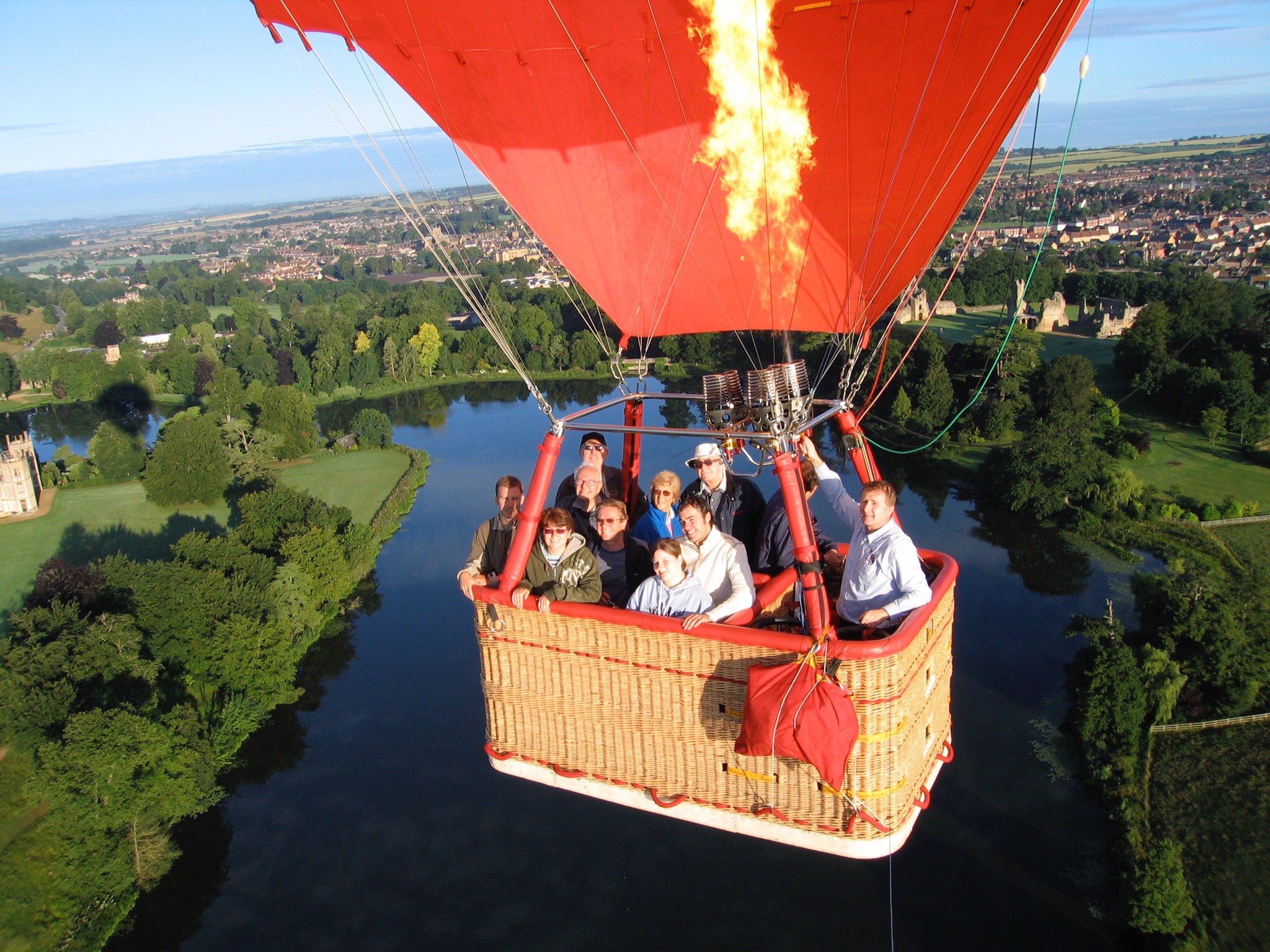
The book opens with a hot air balloon ride ending with a crash when a shooter on the ground kills the pilot—Sharon Bolton is superb @ exciting openings & this may be her best. In the basket amongst the balloon party are two sisters, Jessica & Bella, a police detective and a nun. (I’m thankful the author used the term ‘nun’ properly to mean a woman religious who belongs to a cloistered order.) Apparently Bella is killed in the crash & both the police & the shooter endeavour to find Jessica. So we have basically a thriller plot: will the murderer catch up with the survivor before the police find her. Except we find she is equally afraid of the police, & for good reason. Altho’ in many respects very different, the feel of Dead Woman Walking resembles Dead Scared. In both an undercover woman police detective investigates the operations of a criminal gang. That is all I shall say about the plot, which is, as we expect from Sharon Bolton, full of unexpected but well-prepared twists. The principal one I should have suspected, and a back check indicated it was well-clued.
The settings, as is usual again with Sharon Bolton, are to die for. I have had the good fortune to visit Kelso & Lindisfarne, & even better for this story to have driven the A68 through Northumberland—I had no idea any place in a civilised country could feel so remote & eerie, and that was on an A-road, not hiking through the forest. Also I’ve visited York, so could visualise the frightening chase along the city wall & the narrow passages of the old city within.
I enjoy this author even more for her characters & relationships than the excellent plots, & here the story of the two sisters in the back-story was very poignant, especially Jessica’s inability to accept her sister’s vocation whilst yet admiring & loving her. The depiction of Bella (or Sister Mary Magdelene—I expect her religious name is an allusion) overthows completely the usual stereotypes of woman religious as simple, childish & cute in a saccharine way—this is one kick arse nun. Jessica stole my heart like Lacey Flint, & broke it ultimately, but you’ll have to read the book to find out why.
As for the villains & their enterprise: the Faa family are probably the worst group of subhuman degenerates I’ve encountered & their particular ciminal MO unspeakable: worse even than sex trafficking or child pornography or the snuff-film gang in Dead Scared. Even given their ethnic background, the casual way in which they preyed upon the helpless, without a trace of conscience, continues to disturb me. Because we also are given a full description of life in the convent, we see humanity @ its most depraved & @ its holiest in this story.
But I much appreciate that Sharon Bolton isn’t perfect & gives me something to criticise. Most of the nuns, especially the Mother Superior (tho’ she gets better @ the end) are depicted stereotypically and condescendingly. (Strange how we tend to show holy women as childish.) It’s not any more amusing that members of a religious order should watch TV cop shows than that anyone else does. (A friend of mine who joined a religious order was a big fan of Buffy the Vampire Slayer.) Or that they like to use criminal slang & refer to the cops as ‘the filth’ (a term I learned in the ’70s from reading Ted Lewis, the creator of Jack Carter). I had a problem with the very bent copper in the story as well; his initial motive was well-supported, but I could not understand how he could continue to live with himself whilst remaining involved in such hideous crimes. Also, cleaning up the backstory of Jessica & Bella’s family made for a slightly perfunctory ending, tho’ welcome.  
I was overjoyed by the slight intrusion of a paranormal element. The peacocks were purely decorative—but then that’s about all they are good for (as a Roman satirist remarked, you can’t eat the feathers!) & their names were delightful. Not only is Sharon Bolton a great writer, she also makes us feel that she really enjoys her craft.

Review of Mutiny at Salerno, 1943: An Injustice Exposed, by David Saul

mutiny1

As a Yank, I am awed by three qualities in British character: an extraordinary sense of fairness, a strong sense of belonging, and a tenacious adherence to principle. In May 1940 these traits combined to save civilisation from destruction; in September 1943 they resulted in a massive miscarriage of military justice. At Salerno 193, or was it 191, or 186? – these numbers were matters legal questions actually turned on—soldiers who had been sent to reinforce the allied troops defending their beachhead against counterattacking Germans, refused orders to go into the line. They were certainly not cowards; they were veterans of some of the fiercest fighting against the Afrika Korps, having served in Montgomery’s 8th Army, the legendary Desert Rats. There is a saying that “hard cases make bad law”; the court martial records that David Saul unearthed demonstrate that this was indeed a very hard case, & it resulted in very very bad law. They were all convicted of mutiny. Tho’ in the end no death sentences were carried out, & everyone’s prison sentences had been commuted by war’s end, these men’s lives were blighted @ an early age & they never recovered the honour & respect (& decorations) that were their due.

Their sense of belonging & of fairness landed them into this mess. As a result of an administrative ‘cock-up’ they were sent, some ill & most ill-equipped, across the Med to arrive after they were needed. Mostly they were from Scotland or Northern England, & they believed they had been promised to rejoin their own units. Instead they were ordered to fight piecemeal alongside of strangers. They thought that unfair & they refused.

To an American, that was a fascinating aspect of this story. In the Second World War, & through Vietnam (where it worked poorly indeed), except in elite units like the rangers and the paratroops, the American army treated individual soldiers like so many cogs in a machine, inserting them as individuals wherever needed. In the British Army, most soldiers had a distinct sense of belonging to a particular regiment with its distinctive history, customs, insignia, sometimes even entire uniforms, fighting alongside men with whom they trained & commanded by officers and NCOs whom they knew. (As a result of budget cuts and government indifference, this tradition is today mostly gone.) To imagine an American equivalent—what would happen if 190 US Marines were suddenly ordered to fight as detached individuals in US Army units? (Wonder how often that ever happened?)

When General Montgomery found out, he was appalled & rightly, tho’ too late; the accused had already been minced in the gears of military ‘justice’. But it was another reminder for me of Montgomery’s genius as a military commander. Altho’ we Yanks prefer the command style of Monty’s arch-rival George Patton, each of them had perceived correctly the same flaw in their armies. As citizens of democracies, real soldiers were not what either general commanded. Rather their men were mostly uniformed civilians, & needed to be treated differently from professionals. (The Germans excelled @ creating professionals, but then they had the Hitler Youth to begin the process; the Russian solution was to bring up an NKVD machine gun team & load a belt into the Maxim gun.) Patton fired up his men like a high-school football coach @ half-time, enkindling their macho pride & aggressiveness. Monty tried to appeal to the staider British character, emphasizing consultation, planning, & respect for soldiers’ sense of dignity & self-esteem. Under Patton you’d believe you could do anything; under Monty you’d believe you’d never be asked to do anything stupid.

These men felt treated ‘indignantly’ & with disrespect – that they’d been lied to & used disrespectfully, & in a sense their inner civilian emerged; like trade union members told to do something not in their contract, they downed tools. I was certainly persuaded by this book they were not guilty of mutiny (certainly not by H.M.S. Bounty or 1917 Russian army standards). If the court martial had had any sense, they might have been convicted for failure to obey an order, but with extenuating circumstances, assigned a few fatigue duties, & then returned to their own units to get on with winning the war. Adherence to principle is not always a good thing.

Review of The Cows, by Dawn O’Porter

Not at all sure I’ve chosen the right rating because I’m uncertain whether to regard The Cows as a work of satiric fiction or a domestic drama about contemporary life. The principal characters are women just crossing the threshold of middle-age, tho’ their emotional age is about 16. They are employed on the margins of what is referred to as ‘the creative sector’: Tara a producer ot television documentaries, Stella the PA for a famous photographer, & Camie, a blogger who advocates for women to be free to be childless & enjoy sex without commitment, putting her beliefs into action with a 26 y/o boy-toy. Both Tara & Stella are hot for the photographer for different reasons. Tara has a child but needs a man; Stella, who has bad genes requiring a hysterectomy and mastectomies, wants a baby. But after her first unconsummated encounter with the photog Jason, Tara is videoed masturbating in a tube train and goes viral as the Wandsworth Wank Woman whilst Jason accidentally loses his mobile phone down a town drain. (Neither of these incidents, BTW, is remotely believable.) There is a marvellously embarrassing television interview that Tara subjects herself too, which I found totally convincing and darkly hilarious. The mores in this world are quite foreign to me: boy-toy gets blogger pregnant and—surprise—he wants a relationship & blogger to have baby. But as the voice of childless women, blogger determines on abortion instead, but then was written out of the script in a totally arbitrary and unconvincing accident. When word transpires that blogger was 9 weeks pregnant (I am still trying to figure out how the public finds out—so far as I know obituaries don’t usually include this sort of information), her followers are most upset that she should be such an unprincipled hypocrite as to fall pregnant till they discover (how?) that Stella had scheduled an abortion in the next couple of days, proving she was a person of high standards after all. Meanwhile, at literally the climactic moment, Tara interrupts Jason with the avid to conceive Stella. As we are assured that Jason finds Stella attractive, and her only interest is the baby, why didn’t she simply ask if he would be kind enough to perform this favour of impregnating her? It’d scarcely take him away from the book he is trying to finish for more than five minutes! The more you think about the plot of this book, the more it disintegrates. But parts of it are indeed hilariously funny, and I also learned a huge amount about matters that many of us single males know little about like ovulation cycles and cough syrup.

Review of Harvest of Scorn, by F. G. Cottam

Abandoned House in Lewis and Harris

It is a huge relief to be finally off New Hope Island and realize the new hope of never setting foot on it again. And yet this trilogy – The Colony, Dark Resurrection & Harvest of Scorn – proves that F. G. Cottam deserves recognition as the principal author of full-length horror fiction in the English-speaking world. In the last two centuries two distinct species of supernatural stories have developed since Poe established and J. Sheridan LeFanu perfected the genre. There are classic ghost stories in the tradition of the master M. R. James. These tend to be placed in a homely setting such as manor house, cathedral, college – one of the greatest in a seaside hotel. They sneak up but can culminate in a climax that is scary as all get-out. They work best for me @ short-story or novella length: horse artillery – get into action fast, strike hard. Susan Hill & Andrew Taylor are the greatest contemporary exponents. Then there are the siege-artillerymen of horror fiction who create elaborate full-scale imaginary worlds. Bram Stoker’s Dracula is the standard and archetype. Stephen King is the most successful contemporary commercial practitioner, Adam Nevil & Graham Masterton haven’t ever quite got it together, Sarah Rayne will be a star if she ever learns how to write a believable back-story – she excels @ horrid deaths. Mike (formerly M. C.) Carey is superb but now writes spiritual rather than supernatural fiction tho’ in that tradition, and F. G. (formerly Francis) Cottam is simply the best.

Back-story is plausible & generally accurate, tho’ I can no more believe that an 18th-century English-speaking Scot would be called Seamus instead of James (perhaps Jamie, pronounced Jimmy) than that I go about being addressed as Wilhelm rather than William (actually Will, pronounced Bill! The notion among English speakers that Gaelic names were somehow romantic surely dates only from the second quarter the 19th century, when bastard forms such as Hamish were invented—now in America we have the unisex name Shawn.) The tale of the slaver Andromeda and the witch-doctor’s curse, the slave ship captain who converted (like John Newton who wrote Amazing Grace), became a religious fanatic who tried to create his own utopia in the Hebrides (one such attempt BTW is still very much with us in America – it’s called Utah, formerly Deseret), and the really scary apparitions of the ghost of Rachel Ballantyne were all very effective. But the contemporary cast is too large to develop convincingly. For me the characters are only types: Baxter the sleazy resort developer, Lassiter the recovering alcoholic cop, Fortescue the bereaved marine historian, Ruthie the goth fiction writer, Helen the architect . . . it goes on – I’m still wondering how the name of an infamous Belgian SS-man got attached to Monseigneur Degrelle – all tend to be mere types with a label to keep them straight. For me, in contrast, the characters in Brodmaw Bay, The Waiting Room (especially when a character travels back in time to be with his love), & Cottam’s 1st out-&-out supernatural thriller The House of Lost Souls, were much more interesting and Dark Echo perhaps the most engaging story. (But authors: please ask me before issuing military rifles!) So whilst the Colony trilogy is Cottam’s greatest accomplishment, Harvest of Scorn is not his best book. But worth the effort, even if like me you have to recruit an Audible reader to carry you over the finish line.


Review of The Lie, by C. L. Taylor

SONY DSC


An honour one can acquire on Goodreads is to have written the ‘go to’ review for readers who had a very strong positive or negative reaction to a particular book. I’ve not achieved the former—proud as I am of my reviews of Dare Me & The Likeness—in several cases I fear I’ve accomplished the latter, to have written the review that captures perfectly the faults of a book. My review of C. L. Taylor’s The Accident seems to be one of them. I’ve felt guilty about that ever since, because the manifold faults in that story might have been obviated by better editing (‘no, lambs aren’t “happy” to be roasted’; ‘the I in ICU stands for “intensive”; that means they don’t casually allow strangers to stroll into the ward and try murder the patients’; ‘no, Sylvia Plath didn’t drown herself in her kitchen’) when like all of us, the author was having a momentary attack of the stupids.

Guilty because subsequently I won a signed copy of the author’s next book, The Lie—& it reads on the title-page: ‘To Bill, I hope you enjoy The Lie. All the best. C. L. Taylor.’ It was confession time. I posted a comment on Goodreads: ‘Is my face red! Talk about turning the other cheek. I wrote a snarffy review of C. L. Taylor’s The Accident & now thanks to A. J. Waines I’ve received a signed copy of Taylor’s next book The Lie. Mea culpa! I promise tho’ to amend my life, to read it with care & to try to write the most generous & thoughtful review I can, consistent of course with telling the truth. As I love the theme of double and false identities, I really hope this one will work for me & in the meantime thanks very much to both A. J. & C. L.’

For over a year it sat accusingly @ my bedside whilst accumulating good reviews from other readers. When I finally took the plunge, The Lie indeed reveals itself to be an excellent read. It does tho’ have one feature I’m growing to dislike intensely, the two-track narrative scheme with the same 1st-person narrator, one set in the present & the other in the past. (See also The Roanoke Girls.) As the present-tense narrator (unless amnesiac) already knows how the backstory (here 5 yrs ago) turned out, as a reader I feel played with or jerked around by the author’s pretense to keep me in suspense. But The Lie has as well a theme I love, the principal character who invents a new identity for herself & what happens when the past intrudes.

The backstory is mostly set in a hippy cult commune in Nepal called Ekanta Yatra where 4 BFs, Leanne, Daisy, Al & Emma/later-Jane go on holiday. Only (shouldn’t that be ‘twoly’?) Al & Jane/formerly-Emma) come back to England, & they’re not Fs anymore. What happened to them turns out to be both fascinating & quite harrowing. Isaac, the cult leader, is a particularly vile specimen who talks Tavistock Square jargon in a revoltingly lower-class Scots accent reproduced in all its ugliness in the Audible edition. Even tho’ I have a strong aversion to DV (& there turns out to be a lot in this book), as an adventure thriller The Lie gripped me completely once I got into it on audio @ about 1/2 way. The present story isn’t as riveting & I thought a bit less plausible. What works in an exotic setting (as I read The Lie, I was often reminded of Katy Gardner’s Losing Gemma, tho’ their denouements are very different) loses its flavour & sparkle as a domestic. That may be why The Accident failed to entertain me.

If you’ve not yet read the book & love perilous escape thrillers, I highly recommend The Lie, especially if you like dual-track story lines. So, thank you very much C. L. Taylor, I did indeed ‘enjoy The Lie’.


Review of The World Remade: America in World War I, by G. J. Meyer

IMG_0078

Though The World Remade: America in World War I is a big disappointment, in fairness to the author G. J. Meyer one should concede that he probably wrote the book he intended, but unfortunately not the book that I hoped for. I wanted to find out why and how the United States found she had to enter the Great War on side of the allies. The principal fault in the book is the lack of discussion or even recognition of the place in the world that America had achieved by the second decade of the last century. Though militarily the United States had then created a navy comparable to the Royal Navy, her army was little more than a frontier constabulary scarcely up to the task of chasing Pancho Villa out of Texas. Had the war continued as expected well into 1919, she would have fielded the most powerful army in the world. Leadership of western civilization had belonged to Spain in the 16th century, passed to France in the 17th century, Britain at the beginning of the 19th century. Now it was American’s turn, though it was a responsibility neither her politicians nor her people were ready to accept till 1945, perhaps not entirely even now, as the foreign policy of the current administration betrays.

When I read the phrase, “The American army’s Springfield rifle was considered the best in the world,” I realized that G. J. Meyer ought not to be writing military history. In fact the British Short Magazine Lee Enfield (Lee, BTW, was an American officer) had twice the magazine capacity & an experienced infantryman could fire it much faster, so fast that the Germans thought the British had a machine gun. There are only a few chapters in this very long book given to the actual fighting by the AEF, mostly at a high level of abstraction, though we read a good deal about Douglas MacArthur. Meyer seems to have missed the significance of the U-boat campaign, and its role not only in America’s entry into the war, but why marked the necessity of abandoning a passive role and leaving freedom of commerce to the Royal Navy to insure.

The British might have committed more technical violations of American neutrality with their no-nonsense enforcement of their naval blockade, though I found Meyers’ hand-wringing about starving German civilians maudlin—if the Germans had cared about their civilian population’s welfare, they could have ended the war; they were occupying Belgium and Northern France, after all. But the U-boat ended the leisure the two oceans had provided to isolate the United States from what was going on in the rest of the world, though another couple of decades would pass before Americans would receive a demonstration of what enemy submarines off their coast could accomplish.

Meyer notices, though in passing and mostly with respect to Wilson’s ambitions, that only by entering the war could America play a significant role in making the peace, a peace that would result in redrawing the maps of three continents, with consequences that are very much still with us today, especially in the Middle East. More important, as appears to have escaped the author, is that if America had remained neutral, the peace that would have resulted in Europe would have been the Peace of Brest-Litovsk, leaving Germany and her clients masters of eastern Europe, and ultimately the most powerful rival claimant for world leadership.

Of course, strategic reality had to be sold to the American electorate with the mushy moralism we still label “Wilsonianism”—“making the world safe for democracy” and “self-determination”—but under all the mush there is not only a good deal of enlightened self-interest, but a vital understanding of why America exists, of the duty of the people who inhabit the world’s most powerful nation to make the world a civilized and peaceful polity, to banish cruel tyrants and unnecessary suffering. The Romans understood that, the British understood that, and in 1917 it began to dawn on the Americans. And it may dawn on G. J. Meyer.

I am grateful to NetGalley and Random House for an advance review copy.

Review of The Roanoke Girls, by Amy Engel


The big family secret of the Roanoke’s should be transparent even to the least sophisticated reader well before half-way into the story, tho’ its enormity in stretching to three generations may @ 1st be difficult to swallow. My favorite line in the entire book was: “He’s not a pervert. He waited till I was fourteen & could decide for myself!” As the bad stuff involved neither domestic violence, abduction & false-imprisonment, or small chidren, none of my personal triggers got tripped. But some readers may have a problem. In the idiom most of the characters employ in this book, this is one f-bombed-up family! Also, I fear I am becoming very tired of books with two time lines, in this case eleven years apart, esp. when they have the same narrator, because of course character telling the foreground story also knows everything that happens in the backstory, but has to keep it hidden till the back story gets there. I think if the backstory had been the whole story it would have been a better & more suspenseful book. But it would have been less convoluted & could not have as nearly approached tragic stature.

Essentially, the backstory is what happened to the 16 y/o Lane, who is sent to her grandfather’s farm in western Kansas after her mother committed suicide in New York, where she gets to know her look-alike cousin Allegra. In the fore-story eleven years later, Lane is summoned back to the farm by grandfather because Allegra had disappeared, so the mystery is what happened to her & why. Lane renews her relationship with teenaged boyfriend Cooper as well as Allegra’s old heart-trob Tommy, now an unhappily married cop, & delving deeper into family history which most readers will long since have figured out.
Plot: Mostly I listened on audio. For an e-book, this one is shamefully overpriced so that getting someone else to read to me while I drove was a better deal. Because I was using an iPhone as an audio player and every time you pick up an iPhone you can jump several chapters ahead or behind with0ut realizing it, it became esp. obvious that this book is a jelly fish structurally; it doesn’t much matter where in the story any incident occurs, as you already have long ago figured out the family secret anyway—whether it’s being foreshadowed or back-shadowed is immaterial. A trifle tedious but saves you the trouble of keeping the plot straight, the little there is. Except for finding out what happened to Allegra, absolutely everything that happens in this book was totally what a reader expects, including what happens to Lane in the end.
Setting: If you’ve ever driven on a two-lane blacktop in the American Midwest beyond the 100th parallel of longitude, you’ve seen Osage Flats (unless you blinked). It makes the Australian town in Jane Harper’s The Dry seem a metropolis in comparison. This is really the boonies.
Characters: Growing up in such an abusive & dysfunctional family leads to a Dead Sea level of self-esteem. There is no need to comment on liking the characters; it is impossible to dislike them as much as they hate themselves. So strangely I became fond of both Lane & Allegra. I admired Lane’s honesty & Allegra’s courage in making the best she could of what most of us would find an impossible situation.
Style: Characters throw lots of f-bombs but generally observe the common convention that when referring to the activity which f-bombing literally denotes, they substitute the euphemism “sleeping with” instead. I admired Lane’s exceptional literalism. But though Lane’s style features poetic metaphors & descriptions, “f-bombed up” and “excrementy” are the closest she can come to an artistic description of the tragic dimension of the human condition, what she saw when she gazed into the abyss. Allegra however made her home there.
So despite being repetitious & boring, The Roanoke Girls almost achieves the level of full-blown tragedy because however squalid & unnatural the relationships, they were in their own way loving as well as lethal. It’s the kind of story you could imagine belonging to Classical mythology, to being the plot of a Euripidean tragedy, with rather a bit more bloodshed. It’s not the book the publishers ballyhooed, and priced, either artistically or sensationally. But it’s almost worth the time to read it if you get it from the PL.

Review of Behind Her Eyes, by Sarah Pinborough

Behind

Loved it! I’d say I earned a B grade in sussing & wonder if I’d stopped before starting chapter 52 & let the story ferment for a day or two the whole thing would have come together for me. Shall write a ‘spoiler’ review for readers who have finished this book. But for now, let me say it’s close to perfect – starting with the title!

It is simply impossible to review Behind Her Eyes without taking into account the now notorious ‘WTF’ ending, so this is a spoiler review intended for other readers who have finished the book. Do not read further unless you have read it, or decided you never will but want to know what all the fuss was about:

** Spoilers Follow **

I liked it very much tho’ I did not quite suss out the ending, but the concept it’s based on wasn’t new to me: I’d seen the movie The Skeleton Key. Other features were familiar. Some, like out-of-body experiences are absolutely routine if you work in a hospital. Others, like travel on the astral plane and lucid dreaming are widely accepted—perhaps more widely than most of us might suppose. For many reasons, those who have first-hand knowledge don’t talk about it much, especially to strangers. And of course possession by an alien identity was frequent in Biblical times and is commonly believed to occur in Africa today. (I gather in West Africa encountering an ancestor who happens to be dead isn’t exactly a routine experience, but nothing to write home about.) And I also liked how a fairly hackneyed domestic drama plot could be reworked to accomplish something completely original. Unhappy single-mum Louise has one-night stand with David, psychiatrist husband of Adele, who becomes Louise’s best friend. Finally we discover that the supposed BF Adele actually intended to take possession of Louise’s body, to put new life into her now stale relationship with the David, leading her to put Louise on a slimming programme. And to add an even more original twist, @ the end we find that Adele’s body had been commandeered years ago by a junkie whom Adele had met in a rehab centre, a male drug addict who himself was burning with desire for her future husband David. Reading the book again watching for clues should be a great experience; glad I bought the hardback. I had figured out that @ least one of our characters was really dead, as well as out-of-body travel. But efforts to discern what was coming were thrown off-track by a singular pronoun (one of the last places in English where grammatical genders survive) @ the very beginning, which misled me by being masculine, though had it been feminine I doubt I’d done better, just come up with a different not-quite-correct solution. When writing about a male consciousness in a female body, you really need pronouns like ze & zir whilst speculating what it would be like for a man’s consciousness to experience sex in a woman’s body. (But just what would potential readers think if the title of the book were Behind Zir Eyes!) If like me, you not only enjoy ‘paranormal’ phenomena in literature, but regard them quite possible albeit infrequent occurrences in ‘real life’, you should find Behind Her Eyes a great piece of innovative fiction.