Review of Everything You Want Me to Be, by Mindy Mejia

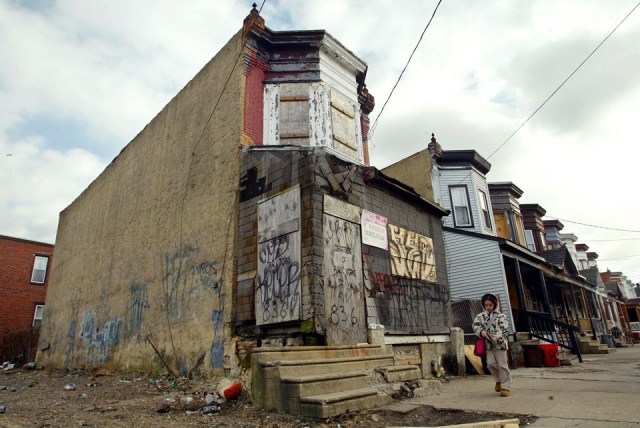
Broken but Beautiful - Farming Barn @  Zimmerman, MN

This novel is in a rural county town in south east Minnesota called Pine Valley; here in Iowa I visit similar towns with no Perkins Restaurant every week & I found the depiction of the residents & the atmosphere perfect. I have never taught high school, much less @ a rural high school, but many of my former students have and report back that their students are “monsters” too. Hattie Hoffman, the protagonist, is a Thespian who has been cast for the high-school production of Shakespeare as Lady Macbeth, but by the second chapter she has become a murder victim. We get her story in flashbacks, as well a that of Peter, her English teacher, and in the present the POV of Del, the county sheriff who is the principal investigator. Tho’ the book is little weak on characterization & the story loses momentum toward the end, this is an excellent read.

When I read school stories I test the authenticity of the characters against my own schoolboy memories & my experience as a teacher, tho’ @ university. I ask, would I have felt & done what these characters feel & do? There I have some problems with both Hattie & Peter. Usually when teenagers are strongly attracted to an older adult, they endow that adult with a level of sophistication and savoir faire lacking in contemporaries & fellow students. Peter hardly seems to come up to what we’d expect to be Hattie’s standard – but then the choices in Pine Valley are very limited. I very much like Hattie’s being the instigator, like Thea Atwell in Anton DiSclafani’s Yonahlossee Riding Camp. Thea is an equestrienne, Hattie an aspiring actor, but both are very talented and determined to go for what they want. I found Peter too vacillating – in Shakespearean terms he is more like Hamlet tho’ one could compare him to Macbeth too. Personally in his situation, stuck in the boonies with a wife who seems to care more for her demented mother and the family farm than for her marriage, I’d have succumbed to an attractive & talented student who worshipped me faster than a heartbeat. How soon later would I have realized I’d cast my career, my marriage, and my fate to the winds? But when it happens, as a colleague advised me once when I was feeling the hot breath of Nemesis on the back of my neck, when you’re going down for the third time anyway, you might as well enjoy it. When things start to go pear shaped for Peter, he seemed to me indecisive, sanctimonious & cowardly. Hattie was much braver & more beautiful than he deserved, which raises her story to the level of tragedy.

The final quarter seemed much weaker, tho’ the very end is bitterly ironic & strangely satisfying. But I found Hattie extremely attractive. I’m currently attempting to write a school story myself with a character who is a Thespian & Hattie is an inspiration for me. Had I been Peter, I would have given Hattie the keys to my car & the keys to my heart & let her drive. It wouldn’t have turned out any worse & the ride would have been great while it lasted. And no bus tickets would be required.

Judged by the standard of Yohnalossee Riding Camp, not to mention the Autobahn intensity of Heather Lewis’s House Rules, Everything You Want Me to Be is a bit tepid. But it is a very enjoyable and engaging school story. I am grateful to Simon & Schuster & to NetGalley for a gratis advance copy.

Review of The Loney, by Andrew Michael Hurley

pace-egg

When I finished The Loney I was thoroughly annoyed & felt that I’d wasted my time with a book that contrived to be a fast read that passed incredibly slowly. About three hours & a nap later what apparently had happened in the story jelled & I saw why one might compare it to The Wicker Man, as well as to some of the stories by Shirley Jackson and H. P. Lovecraft. From my current Christian perspective, this book is a story about two ways not to observe Easter: an extremely constricted & superstitious species of Roman Catholicism (which was already totally outdated in the 1970s when the principal action takes place) & an atavistic pagan survival which is cruel, messy & utterly ruthless. Guess which really works. With the Catholics you get simnel cake & a shrine of St. Anne with a magic well; the pagans make their most striking appearance as the Pace Eggers. I’d never heard of these before but found the Google images are priceless. The setting, in the neighbourhood of Morecambe Bay with its fierce and deadly tides, is wonderfully eerie too.

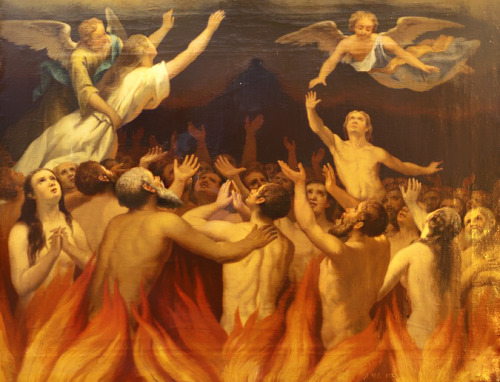
But there are huge defects as well. It is a tedious read & there are more loose ends than Penelope’s loom after she’d undone her day’s efforts. Just how did an American WWII army rifle find its way to an old house on the English coast, complete with ammunition? How did Hanny manage to load it without instruction & without ending up with a very sore thumb? Not to mention tossing it about as if it were a baton – an M1 weighs 9.5 lbs & is rather awkwardly balanced. An Enfield would have been a better choice, lighter, better balanced, easier to load & much more likely to be found in England. We are never told why the narrator’s parents are called Mummer & Farther & I kept wondering whether these were pet names or dialect pronunciations. In a non-rhotic London dialect I expect the former would sound to a North American ear like “mummah” but how would the latter sound different from usual? Also how could there have been a 300 year old shrine to St. Anne in England after the Reformation? There’s also a Catholic church with a frightening Day of Doom picture on the wall that’s supposed to have survived from the Middle Ages. Not likely.

So I give The Loney three stars, not because it’s middling, but because it runs the gamut from one to five back and forth so often the stars begin to twinkle. The Catholic characters are extremely depressing. It is hard to believe that Mummer is still under 40 & that Vatican II had occurred. She complains to Father Bernard – an Irish priest of somewhat liberal tendencies that he isn’t maintaining the standards of the sadistic & psychotic Father Wilfred. Once more I’m persuaded that the classic supernatural story does not work well at full length. (That may be one reason I’ve never become a fan of Stephen King & why I’ve bogged down on Sarah Rayne & F. G. Cottam.) At the length of The Lottery, Ancient Mysteries or Casting the Runes, pagan survivals work much better for me. But finding the Pace Eggers was worth the price of admission.

Review of Marrow, by Tarryn Fisher

lead_960

It was delightful to discover that Margo is a Swiftie, but Tarryn Fisher doesn’t tell us which of Taylor’s songs is her favorite. Often I thought it ought to have been “Mean”: “Someday I’ll be living in a big ole city”—Seattle, actually—“an’ all you’re ever gonna be is . . .” dead! Too seldom maybe “Safe & Sound” but “I Know Places” could be perfect for this girl on the run from a depressed & depressing dump of a coastal town in the Pacific Northwest called Bone Harbor, where Margo’s mother sells herself for $100 a pop. We 1st encounter Margo when she is 13; by the end of Marrow she’s a 20-something who has left a trail of mayhem from Washington State to Florida. She is a most welcome new recruit to the elite squadron of young avenging kick-ass chicks: Alex in The Female of the Species, Lacey of Girls on Fire, Candice Fox’s Eden, & Tuesday of Tuesday Falling. Tuesday is probably the most comparable, especially when dispatching slime-balls who badly need killing, tho’ Margo’s a lot like Alex in taking care of business up close & personal. But as with Tuesday Falling, in Marrow the ultra-violence goes so OTT as not to gross out any but the more squeamish reader. With Tuesday it’s comic-book hero stuff, Margo’s is phantasmagoric. Long before she gets her psych evaluation (really!), you may start suspecting you’re in the hands of an unreliable narrator. So watch out!

As with Tuesday, I suspect we want to stand up & cheer for Margo because we feel society hasn’t lived up to its implied bargain with us. We give up our right to defend ourselves & to exact retribution to the state in exchange for protection against killers, rapists & thieves, protection the state fails to provide. Margo frequently questions herself, fearful that she has morphed into a murderer & monster. When I was her age, I might have been similarly confused between the demands of legality, morality, & spirituality. But she (& if I’m reading her right Dr. Elgin her psychiatrist) has an inkling of what is actually happening with her. What in the 18th century would have been called her “moral sense” takes possession of Margo, so she has no choice but to act & to exact retribution, especially from those who prey on & abuse the weak, innocent & helpless. Personally I’d go with Greek tragedy. As Margo develops as a revenger a terrible daimon emerges, an Alastor or Erinys ultimately merging with Margo’s essence. Like in Greek tragedy, the daimon has a literal local habitation, appropriately termed “the eating house”!

If you know an on-line book club doing a group read of Marrow, do let me know. I’d so love to discuss it with others, & I doubt that any two readers will completely agree about what is going on with Margo, Margo’s state of mind, the other characters & even their status. What is supposed to be real & what is imaginary? This is a story that will challenge you on every level—literal, political, psychological, moral, symbolic & whatever you think of Margo (& frankly I thought she’s to die for), you’ll not forget her.

Oh, & maybe Taylor Swift & Ellie Goulding singing “Burn”!

Review of Tell the Truth, Shame the Devil, by Melina Marchetta

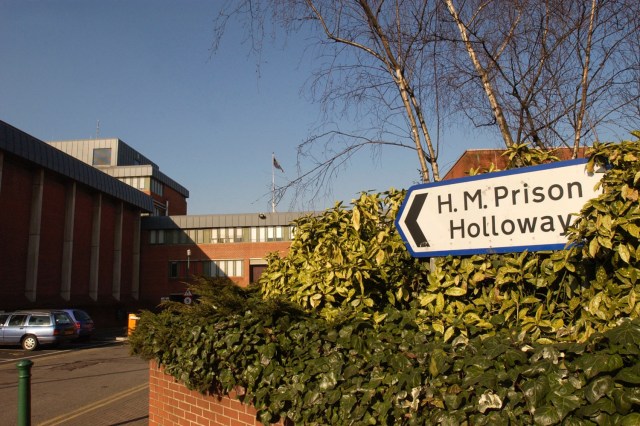
hollowayprison2611a

 Tell the Truth, Shame the Devil has been labelled Melina Marchetta’s ‘adult debut’ – that sounds like a patronising put-down from a genre snob. Along the Jellicoe Road is a superb work of fiction that exceeds the highest standards of maturity & literacy, as well of being amongst the very best novels with a school settings by a contemporary novelist. Megan Abbott’s Dare Me excels for intensity and drive, Tana French’s The Secret Place in pathos, but only Patrick Gale’s Friendly Fire matches the scope, depth, and beauty of Jellicoe and its protagonist Taylor Markham. But with TTSD Melina Marchetta moves into unfamiliar terrain, with a middle-aged English (tho’ not quite entirely English – grandfather was Egyptian and his Christian name is Bashar, hence Bish) policeman as its principal character, set in England and France (I found out that if an Englishwoman gives birth in the Channel Tunnel the child’s legal birthplace is Folkestone!) including the notorious Calais ‘Jungle’. Fear of ‘Islamic terrorism’ and its effects on innocent families is the main theme that drives the story. I’d held off writing this review because I found it so hard to get my mind around all that’s going on in this brilliantly wide-ranging book, fortunately the National Library of Australia came to my aid with this synopsis.

Chief Inspector Bish Ortley of the London Met, divorced and still grieving the death of his son, has been drowning his anger in Scotch. Something has to give, and he’s no sooner suspended from the force than a busload of British students is subject to a deadly bomb attack across the Channel. Bish’s daughter is one of those on board. Also on the bus is Violette LeBrac. Raised in Australia, Violette has a troubled background. Thirteen years ago her grandfather bombed a London supermarket, killing dozens of people. Her mother, Noor, is serving a life sentence in connection with the incident. But before Violette’s part in the French tragedy can be established she disappears. Bish, who was involved in Noor LeBrac’s arrest, is now compelled to question everything that happened back then. And the more he delves into the lives of the family he helped put away, the more he realises that truth wears many colours.

Reflecting on this book after I finished, I was struck by how much it reminded me of John le Carré’s spy novels, especially Tinker, Tailor, Soldier, Spy, his greatest. Like George Smiley, Bish is a forcibly retired middle-aged officer with a bad marriage whose mode of investigation consists mostly of going about asking questions and hearing stories that ultimately reveal what really happened. Because Bish’s teenage daughter Bee (Sabina) was nearly a victim, the ‘Home Office’ (a couple of spooks named Grazier and Eliott, the latter an old school pal of Bish’s who would be out of his depth in a car-park puddle) deploy Bish to interview the parents and survivors. He encounters massive resistance and refusal to cooperate, especially from Violette, everybody’s favourite suspect, and her mother Noor, the self-confessed perpetrator of a previous atrocity. And his daughter Bee is anything but helpful to the investigation herself, not to mention Bish’s relationship with his estranged ex-wife Rachel, about to give birth to another man’s child.

In one respect, tho’, TTSD shows its YA lineage. The teenage characters take all the prizes, for bravery, initiative, resourcefulness (at one point they steal a Salvation Army bus), and loyalty to their friends. They are also physically attractive and fit, especially in contrast to Bee’s sodden father Bish. Bee is a junior Olympic calibre runner – that figures in the plot too – as well as speaking much better French. And Violette is even more elusive, able not only to travel from Australia to France undetected, but to remain on the run in London (with a 13 year-old accomplice) for weeks with the entire British anti-terrorist establishment searching for her. At first, because we encounter them through Bish’s eyes, we find the younger characters’ evasiveness, surliness and secretiveness annoying, but long before the book ends we’re dying of envy.

The OA characters are equally well-drawn. The most striking is Noor, Violette’s mother, the confessed bomber serving a life tariff at Holloway. She was on the verge of defending her PhD thesis in molecular biology when the atrocity occurred and we discover there are strong reasons for suspecting that her confession was neither truthful nor voluntary. None the less, I found her really obnoxious. She marshals passive-aggression at the level of Blitzkrieg. She constantly whinges about bias against Muslims (‘moose-slims’) and about the persecution suffered by her family. Completely understandable. When denied all other means of self-assertion, articulate inmates resort to snarkiness and sarcasm. (The inarticulate refuse to wear uniform and decorate their cells with faeces.) We have long-since learned from Tana French, Alex Marwood, and John le Carré himself (as well as some real IRA convictions) that the authorities are totally corrupt and eagerly stitch-up any likely suspect to close the case and get their solve. Yet, tho’ at times Noor sounds like a recruiting sergeant for ISIS, in this story Bish and even his ‘Home Office’ controllers are genuinely trying to discover the truth and to exonerate the innocent, so ironically we find that if both the teenagers and Noor had been more forthcoming, this book would have been shorter, tho’ not so interesting or insightful. As it turns out, the actual explanation for the bombing is quite unexpected but thoroughly prepared. The manner in which the bus bombing was carried out was subtly clued by the author, tho’ the motive unforeseeable.

I must add a word about the audible. The British actor Zaqi Ismail was absolutely brilliant, with a wonderful repertoire of English and foreign dialects. I especially liked his version of Noor’s brother Jimmy (Jamail). His estuary dialect features a glottal stop so strong that ‘daughter’ comes out sounding like ‘door’. Bish’s mother, widow of a minor diplomat, speaks Posh, and Violette mostly Aussie, tho’ she can do Posh or Goth when necessary. The voice of Noor struck me as unlikely, sounding as if her first language were Arabic; I would have expected estuary but more upscale than her brother. But the narrator added hugely to the pleasure, just as did hearing Jellicoe Road with an Aussie voice.

After using a huge amount of space, I still feel I’ve but grazed the surface of TTSD. But I am tired and need to finish this review. Let me close simply by saying that Melina Marchetta has just demonstrated that she may well be the best contemporary novelist in the English language.

Review of The Trespasser, by Tana French

img_0048

You know an author has an established reputation when her name appears on the dust jacket in larger type than the title of the book & here it’s appropriate: you’ll read The Trespasser because it is by Tana French, not for the characters or relationships. Our narrator is Antoinette Conway, whom we’ve already met in The Secret Place. As we expect, she continues to be exceedingly unpleasant & to excel @ playing the bullying interviewer. When she uses her ‘good cop’ routine, she calls it her ‘Cool Girl’ persona – it’s the only evidence in the story that she’s ever read a book BTW). Stephen Moran, the sympathetic & humane member of their team, makes his third appearance. Conway simply uses the letter D to indicate ‘detective’ (too lazy to spell it out apparently) tho’ the way most the male members (sorry, couldn’t resist!) of the squad behave, I kept thinking of another word. Which fits Conway; she’s a total potty mouth. (Still trying to figure out if there’s a semantic difference between ‘shit’ & ‘shite’ in Irish usage.) But tho’ Conway lacks a soul, I admired her more than ‘Scorcher’ Kennedy of Broken Harbour, perhaps because unlike Broken Harbour, The Trespasser offers a villain who deserves an avenging Fury for a D.

A sign of an excellent author is that her lesser works cast new light on her best, & that was true for me here. As in The Likeness, we have the victim – here Aislinn Murray – as the most interesting character. That made me rethink The Likeness. I’d thought Cassie Maddox was my favourite of French’s characters (& she is in In the Woods) but now I believe that who I really loved best was not Cassie Maddox when she is just being herself, but Cassie Maddox when she is performing Lexie Madison. In The Trespasser it is the victim herself who goes undercover, giving herself a total makeover in order to accomplish a goal that may seem an obsession & she puts herself into the role even more completely than Cassie. Ironically it is surrendering to her true self & true love that precipitates Aislinn’s murder. I also like Aislinn’s friend Lucy in a supporting role as confidante.

But whilst you’d not read The Trespasser for attractive characters, it is beautifully plotted. As in other of Tana French’s novels, you’ll get bit tired of chasing red herrings If you’re an experienced reader you’ll spot them. (You’ve also learned never to co-operate with the interrogators; they’re out to stitch you up & don’t care who did it so long as they get their solves.) It’s not perfect – there’s a subplot involving Antoinette’s father I found distracting – yet the last third of the book when everything starts fitting together is utterly unputdownable. And I was pleased by the discovery of the villain whom I quite despised, unlike in some other of Tana French’s novels where I would have let them get away with it.

The Trespasser is the sixth in the Dublin Murder Squad series. I rank them, in decreasing order as follows: The Likeness & The Secret Place in a virtual tie for 1st, both tragic & poignant with beautiful relationships, but with the presence of Cassie as narrator perhaps making the difference. Then In the Woods, especially for Cassie tho’ Rob is such a total mess I cannot bring myself to read it again. Followed by Faithful Place; Frank is an excellent & attractive character but his father & mother are utterly repulsive for me. Then I’d place this one, with Broken Harbour last, but still a solid four star. What to give The Trespasser? I’d give it five stars for plot but Conway’s potty mouth effectively forestalls reading it again & costs one star.

Review of The Fortress, by Danielle Trussoni

nikoli

An autobiographical memoir ought to be simplest of genres, the author is also usually the narrator & principal character, the other characters are present in the author’s memory, & the plot seemingly a simple recounting of what happened in real life. But to a literary analyst, memoir is fiendishly complex. In what sense is Danielle Trussoni, a woman who once attended the University of Iowa MFA program identical with the Danielle Trussoni in this story, who lived in a castle in southern France while married to a Bulgarian novelist named Nikoli & who is telling this story? Is the 1st person narrator the same person as the writer who once wrote a novel I confess I never finished called Angelology? The narrator here mentions its publication & her American book tour, but solely for how those affected her marriage, much to my disappointment because I’d love to know where she got the idea & how she discovered the Book of Enoch & the Watchers. Should you want to fine-tune your literary theory, you can also ask about what theorists term “the implicit author”—the sort of person whose presence you feel behind the book you are actually reading. All four of them, the author, the narrator, the principal subject, & the implicit author, have in common the name Danielle Trussoni.

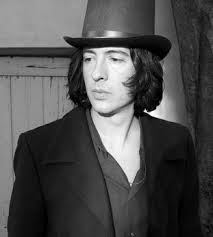
An Amazon review wondered that Nikoli didn’t sue Danielle for slander. Which Nikoli? we wonder. The Bulgarian novelist in real life or the character in Fortress. Can a character in a story book sue the author for an unflattering portrait? I’d love to attend the trial Falstaff v. Shakespeare. There is, however a website maintained by Nikoli the novelist & ex-spouse (tho’ she’s not mentioned) of the author Danielle Trussoni. There’s a picture of him wearing a top hat like the one described in Fortress that made a line from a song by Taylor Swift come immediately to mind: “Run as fast as you can.”

The two principal characters in Fortress are a crazy romantic from Wisconsin who encounters a darkly glamorous sexually magnetic Bulgarian., the Heathcliff figure every crazy romantic is eager to meet. It doesn’t matter that Danielle already had a child. (We discover later that she’s playing faster & looser with her domestic arrangements than she reveals @ 1st.) She gets pregnant & makes the mistake of going to Bulgaria to meet his parents & have the baby. (Her account of a Bulgarian L&D unit is utterly harrowing.) His dealing with the baby’s name on her birth certificate reveals straightway that he is a controlling liar. She makes the bigger mistake of marrying him, which means that under the law after they move to France, half of all their property will be his, even tho’ he contributes absolutely nothing to their finances. When @ last Danielle wises up (we are introduced to a White Knight, a handsome young Frenchman, as the start of the book), he resorts to blackmail, lying, gas-lighting, even parental abduction, & brings his parents from Bulgaria to try to torment Danielle into giving him custody of their daughter. In short, Nikoli fits every stereotype you ever had about Balkan males. Maybe it’s the effect of growing up in places that were once ruled by the Turks. (Nikoli also affects being a magician, a Buddhist mystic, & part vampire, tho’ with that “Oil Can Harry” hat, au fond he’s just the cheap shallow villain in the melodrama, but unfortunately he really does have the deed to the house.

Although Fortress dragged in the middle, I found it quite enchanting, with a heroine we love & suffer with, & a villain whom we want to strangle. The last portion, especially when the White Knight’s mother, the White Queen, comes to Danielle’s aid, had me wanting to stand up & cheer. So despite many flaws, Fortress deserves the whole five stars, even tho’ I’m not quite sure which Danielle Trussoni will accept them. Maybe the author of Angelology, one of the best fantasy novels I never quite got round to finishing.

Review of The Female of the Species, by Mindy McGinnis

mcginnis

 The Female of the Species may be the best tragedy set in an American public high school that I have seen since Megan Abbott’s Dare Me. The protagonist, Alex Craft, not only plays in the same league as Beth Cassidy, she could compete with Antigone or Electra as a spirit too big for the narrow frame of this world with its petty rules to contain. The setting in an unnamed small town in southern Ohio – almost every day I visit similar places in Iowa; the three 1st person narrators are seniors: Jack, a star athlete, Claire, the dtr. of the Lutheran pastor, known to everyone as Peekay (for “Preacher’s Kid”), & Alex herself, a loner who speaks in an idiolect derived mostly from reading. (Who else could describe figuring out how to fire a shotgun as “diagnosing”?) In the very opening chapter we know what makes Alex so different from the other students. When she was a freshman a pervert kidnapped, tortured, and cut Alex’s sister Anna into little pieces. The murderer walked. Then little sister took care of business. The perp died horribly. No one found out who did him in. Alex keeps herself very fit. She runs every day & has a hard lean body & her turn-around point is the town cemetery where her sister is buried. She is skilled @ unarmed combat. When someone tries to rape one of her friends, she rips his face off. Literally!

Alex also volunteers @ the local animal shelter, where she & Peekay first become friends & they are sent to recover a bin-liner full of dead puppies (“a dump”) from the road-side. The girls’ hearts are broken but they take care of business & take them to the incinerator. I’d thought working in a hospital & @ a hospice asked a bit of me sometimes – I’ll really look up to animal shelter volunteers now.

Alex & Peekay are excellently drawn characters. When I taught nonfiction writing I was sometimes amazed @ the personal stories my students shared, including several PKs & I thought Claire (Alex insists on calling her by her real name) very believable. But I found Jack the athlete a stereotype with his high scores both on the field & with the girls, esp. Branley the cheerleader (whom Beth Cassidy would have squashed like some bug.) It was a real howler when Peekay thinks dumb-bell Branley ought to go to nursing school because she maintains a C average. RNs are some of the most intelligent people I’ve ever worked with – & I’m a recovering university professor. But I was most annoyed with Jack when he vacillates (in the direction of Branley the cheerleader naturally) in his new relationship with Alex when he discovers her vocation dispensing justice where our society fails. A real man wouldn’t have had doubts. He’d have joined the army & applied for Ranger school (along with Alex?) so they could hone their skills. There was also some contrived plot. Later in the book a new pedophile predator seems shoe-horned into the story just for Jack to have the big revelation.

Is it in the nature of YA to be incapable reaching the upper limits of literary excellence? I believe that every genre can achieve the highest artistic standard. (After all, if Huckleberry Finn were published now, it would be marketed as YA.) But if you compare The Female of the Species with Dare Me, you may sense where a YA author draws back from no-limit tragic spirituality. Both Beth & Alex are flat-out Nietzscheans who don’t blink when the abyss gazes back, but here the other characters do. Peekay’s father utters predicable bromides. Peekay herself says that she should have reported the rape attempt to the police. It felt we were dropping from the level of high tragedy to everyday legalisms, like suggesting to Medea she get counseling to deal with her “anger issues” (@ one point Jack mentions that Alex could “get some help” after they go to college – sounds like something Clytemnestra could say: “Electra, you really need to ‘get some help’ with your father-fixation.”) So as a tragedy, The Female of the Species doesn’t quite measure up to the level of Dare Me or The Secret Place, but it deserves the whole five stars as an excellent school story.

Review of The Wonder, by Emma Donoghue

purgatory

Should you want to know how The Wonder compares to Emma Donoghue’s previous hit Room, I’d say there’s no comparison—The Wonder is worlds better, & not just because we don’t have to endure listening to a 5 year old. No question for me that The Wonder is the historical of the year. Before reading it, I made sure to swot up the real story behind Emma Donoghue’s novel, Sian Busby’s A Wonderful Little Girl: The True Story of Sarah Jacob, the Welsh Fasting Girl. Emma Donoghue has moved her tale one decade earlier & transferred the location from Wales to Ireland, but as with the historical Sarah Jacob, we have a committee of notables established to investigate the veracity of the remarkable tale of a little girl who seemingly lives on air, nurses hired to observe her round the clock to insure no surreptitious taking of nourishment, & the involvement of the nationalist press. In English eyes, both the Welsh & the Irish were regarded habitual scoundrels & liars. The change in location requires as well a change in religions. Sarah Jacob’s family were mostly chapel, tho’ the principal clergyman involved was Anglican. In the wonder, Anna O’Donnell & all the other characters are Roman Catholic, except for our main character the nurse Liv Wright, an Englishwoman of very sceptical opinions. In , Catholicism provides the principal motivation for most of the characters as it exerts its baleful force impelling this 11 year old girl’s fast unto death with her parents & most of the local Catholics seemingly cheering her on. To put it a little bit facetiously, Anna believes that starving herself to death will give her recently deceased brother Michael a Get-out-of-Purgatory-Free Card! Having been reared in the same toxic variety of Roman Catholicism, I found most of the trappings – holy cards, novenas, rosaries, saccharine Mariolatry with expressions like “poor banished children of Eve” (that’s us), confession, mortal sins, the Redemptorist priests’ missions (sort of a Catholic version of a Fundamentalist tent meeting with lots of fire & brimstone preaching), & of course a nun in appropriate black habit – un-fond but vivid memories indeed. It is very hard to discern the boundaries between actual Roman Catholic dogma (what Catholics are required be accept de fide – which @ the time this book is set did not yet include Papal Infallibility), & what we might call “folk Catholicism” & out&out superstition.

Particularly with the priest in this story, these popular beliefs were treated as harmless adjuncts to the true faith, tho’ we see in Anna’s case that they can be lethal. In the case of Ann’s horrible mother Rosaleen (her voice & accent on the audio are like nails scraping on a blackboard), respectability & piety matter much more than the suffering of her daughter. The audio narrator, Kate Lock, was also brilliant with the other Irish voices, especially Dr. Brearty’s, with its mixture of senility, pomposity, credulity, provincialism, snobbery, & of course masculine superiority. Generally the all-male investigating committee seem a good example of what we now term “group-think” – each of them seems to suspect that what Liv is telling them is true, but no one of them can admit that collectively they are credulous idiots.

I have a few historical doubts. Could an Irish girl in Anna’s circumstances (after listening to the audio I almost heard “sarcumstances”) have so many books, including Thomas-a-Kempis’s The Imitation of Christ? She & the nun Sister Michael would not have stayed home when she was too sick to go to mass on a Holy Day & read the liturgy in a missal – it would all have been in Latin anyway. In those days Roman Catholics did not receive communion for the first time till they were about 14 (G. M. Hopkins wrote a poem about it, “The Bugler’s First Communion”), when they were confirmed. It also seems strange that a respectable Englishwoman then would have openly expressed as much religious scepticism as Liv. But quibbles aside, this is a brilliant book. There will be times when you want to strangle some of the characters; their pig-headed fideism is so infuriating. I’ll of course not give away the ending, but you will be on edge continually & just a little surprised @ how one character turns out. Emma Donoghue has given us a magnificent feat of historical reconstruction & storytelling.

Review of Arrowood, by Laura McHugh

keobest

 A superb gothic. It will be hard to write a review & I am probably influenced by the setting because I have been so jealous of people who lived in ‘real’ places like Cornwall & Norfolk that I am so happy to have enjoyed a story set so close to my home. Simply setting a book in Iowa doesn’t work for me. Both Marilyn Robinson’s Gilead & Heather Gudenkauf’s The Weight of Silence tanked. But the architecture of old Mississippi River towns attracts me & so when I finished hearing the audible version of Arrowood I had to take a few hours of a bright Sunday afternoon to visit the site.

keo2

As you see, it was hardly @ all creepy & yet Laura McHugh chose an excellent setting. Like Manderley, the archetypical gothic house, Keokuk offers numerous old houses you’d both love to live in & be terrified of trying to pay to heat & maintain as a scarcely employable ex-grad student with a shrinking trust fund (even before finding some defalcations have been ongoing). I regret only that the author made the Arrowood family Catholics. Had they been Episcopalians the stunning St. John’s Episcopal Church could have been their home parish. She exaggerated the sense of decay Keokuk radiates, tho’ I enjoyed catching sight of the very same Sonic Drive-in Arden resorts to for lunch. (I also know well the truck stop in Waterloo she visits later.) Most depressing aren’t dilapidated houses abandoned to squatters (like the “sister house” on Orleans Ave. in the book) but lots on which are found contemporary suburban family dwellings – where in the last few decades some noble 19th-century mansion succumbed to the wrecking ball.

gothic-house

Arden, narrator & principal character, is both attractive & haunted, as a gothic heroine should be & we share her uncertainty whether the unsolved Iowa mysteries true crime writer will turn out to be a creep or a white knight. Given that Arden’s recently deceased estranged father had owned a water-ski tow speed-boat named The Ruby Slipper (!!!) it wasn’t hard to peg him (tho’ when you view the Keokuk Yacht Club you’ll not be surprised). Arden’s mother manages to be both totally believable & equally repulsive, now married to a sleazy evangelical pastor who oozes synthetic cheap grace. Add the seemingly friendly handy man who used to have a thing for Arden’s mother. Laura McHugh adroitly connects the secrets of several characters, including Arden herself, when the mystery of Arden’s missing sisters is finally revealed. She uses all the dramatis personae for more than red herrings, a sign of good plot construction. The story seems to drag a bit in the middle; as we move to the denouement it tightly engages the reader. I kept forming new hypotheses, only to meet another better twist.

keoi0904

The year’s not over yet, but we’ve already been so blessed with a superb British gothic in The Fire Child & now a fine American example of the genre.

Review of Under the Influence, by Joyce Maynard

cigarette-boat

Having the author Joyce Maynard herself as the reader for this audible book increased the intimacy yet the voice always seemed authentically the character Helen herself. I’d love to read Under the Influence (the title is relevant in several senses) with a book club. It should engender lively discussion & vigorous disagreement concerning which characters are attractive & unattractive & why. I love stories about friendship between characters with very different backgrounds & social status. These tend to be ill-fated, tho’ when they’re not – as in some of JoJo Moyes’s novels – they can end wonderfully. Here we a have a struggling single mom – well, not even that, since she lost custody of her son Ollie to her nasty ex as a result of a DWI (pure bad luck) – making a precarious living taking pictures of school children. Totally unexpectedly she is adopted by a wealthy & glamorous Bay Area couple, the Havillands, who shower her with presents & hospitality while she serves as a kind of PA & court photographer for Ava, the wife confined to a wheelchair as a result of a spinal injury. Her husband, appropriately named Swift, is a lively boisterous extravert who loves big toys for big boys, including a cigarette boat he keeps on Lake Tahoe.

Readers who know their classics will trace Swift Havilland’s literary bloodline @ once, from Fitzgerald’s Jay Gatsby back to Petronius’ Trimalchio, with a dash of Falstaff mixed in. (Swift also reminds me a lot of a current American political figure much in the news.) If you are an old movie buff, like one of the characters in this story, toss in an older version of one of those “madcap” (whatever kind of hat that is) couples from a ‘30s flick. Underneath however, there seems to be something sleazy about them, & Elliott the old movie buff, who becomes Helen’s lover by way of Match.com, sets out to find out what’s behind the facade of their charitable foundation for neutering unwanted dogs.

Personally, tho’, I was a little disappointed both by the plot & the characters. For me this kind of plot requires that the needy friend ought to be the one betrayed to generate real pathos & I expected that it would be Helen who would get the el dumpo. The more I reflect on the story afterward, the more I wonder what the Havilland’s real motive could have been for adopting Helen & her son Ollie almost as family members. Too often it seemed that the plot was controlling the characters’ choices rather than their choices the plot. Also, I found Elliott a bit of a stick (of course I’m prejudiced that he’s a poor sailor). A real man on discovering Helen’s custody situation would have offered to take over her legal fees there & then. I expect Joyce Maynard realized that but it wouldn’t work with the plot, which required Helen remain dependent on the Havilland’s promise of legal assistance from Swift’s fix-it lawyer. There was also a problem with the critical recognition scene where they, & we, find out what the Havillands are really like. We have to get it slowly at 2nd hand through the words of an 8 y/o backed by unlikely photo evidence. Finally we fast-forward ten years to wrap everything up & find out the fate of the Havillands from the newspapers.

So artistically speaking I’ll not rate Under the Influence @ the top level for plot or characterization. Morally and spiritually the choices seemed too obvious & in the case of Elliott almost judgmental. But tho’ the ending was dragged out, I found the story a compelling & engaging read which would be great fun to discuss.