Review of The Taste of Blue Light, by Lydia Ruffles

36712729393_839d676b7a_b

I loved the first half of this book. It is set in the most extraordinary school – a pricey independent boarding school devoted to the arts, where Lux Langley, who will turn 18 on 23rd November, is suffering from amnesia as well as synaesthesia, which causes her to have headaches coloured red. That part worked for me; last night I read some before sleep and dreamt of fire. And as a lover of stories about eccentric schools, I found Richdeane a treasure. They really do art snobbery. The teachers are called “directors” – the headmistress is the “head-director” – and the students are called “Artists”! They are expected to dress entirely in black. Lux lives in a dorm called “Dylan” (the Nobel Laureate not the Welsh poet); there’s another called “Van Sant” (whom I’d never heard of – makes movies according to Google and I’d actually seen a couple.) “Art” is literally God at Richdeane. Each day at assembly the head-director leads them in their Act of Faith: “We pledge ourselves to the will of the muses, and to the words of the greats. We give it to art and we let go.” Indeed, sometimes Lux uses “By Art” as an expletive. So I was expecting a side-splittingly funny satire on aesthetic pretentiousness. Unfortunately we have to take Lux seriously. Generically the story is not a satire, but a Bell Jar. For Lux the entire school, especially one of the directors who is also her counselor and coach, Dr. Baystone (who is not quite “a real doctor” (i.e., not a physician) and her BFs Olivia and Mei, are actually involved in treating Lux’s condition, and trying to get her to remember what happened last summer when she was interning at a gallery, went to a leaving party and apparently overdid it, and found herself in hospital the next day with no memory of how and why she got there. From a therapeutic POV I find it ethically dodgy to subject a patient to a course of treatment under false pretenses, but when we find out what really happened, I was so incredulous that the treatment scarcely mattered. At exactly 2/3 Lux started remembering and I stopped believing. I’ll give nothing away, but simply reveal that it was something that Lux would have been constantly and publically aware of whether she could remember it or not. (Even tho’ her major source of news seems to be Hello!) Otherwise, despite the extremely artsy setting, The Taste of Blue Light was pretty typical of the Bell Jar genre, with a very self-centred main character and a manipulative somewhat devious therapist. We also have Lux having relationships with a couple of boys – a sexy but uncaring sculptor and a puppy-doggish painter. It is also amusing that Lux ends up working in a quite different kind of “gallery” than Richdeane would prepare her for. Or maybe not. After the big revelation at 2/3, the ending seemed pretty “meh” but I skimmed to find out where Lux was at 20 and it looks predictable. As for me, I think it’s time I read Jennifer Dawson’s The Ha-Ha (1962) once more. To me it represents the epitome of the genre.
Review of The Wife between Us, by Greer Hendricks & Sarah Pakkanen

reveal


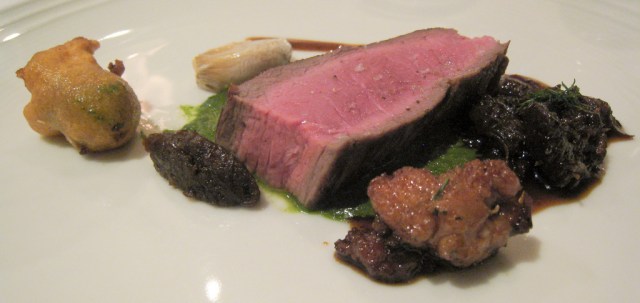
I’m being a trifle severe about this one; the reader for whom “Wow, I didn’t see that one coming!” is the highest accolade, for whom the word “reveal” isn’t a verb or employed as a noun doesn’t connote yesterday’s warmed over roast of young calf (see illustration above for “a reveal”), might actually enjoy The Wife between Us. But readers with high artistic standards who expect surprising twists to integrate seemly disparate elements of plot and character into harmony will be annoyed by the authors’ using the backstory as a magical hat full of rabbits to produce whenever the story starts to lag. Even in the epilogue. Perhaps joint authorship is responsible. This book keeps changing its mind about what it wants to be & who the characters are. We start with some confusion over the identities of Nellie & Venessa, & get about four different versions of Emma before we finish running the range from ingenue innocent victim to cunning schemer. The main character offers a very unlikely backstory: I doubted she would have been unaware that the professor with whom she has a college affair was married, & I am certain that a sorority hazing incident involving ETOH that resulted in a pledge drowning would have led to an officer from the national arriving to revoke the chapter’s charter even before the college kicked them off campus. (The authors owe the Chi Omegas an apology. Fraternity brothers might exhibit such stupidity, but not sorority sisters.) I doubt the pledge’s family would be mollified by donations to an animal shelter. They would probably have sued the college & the sorority & the main character. Reader’s of “psychological thrillers” will be used to Richard, our standard garden variety sociopath, wealthy generous but an extremely controlling & jealous husband. The chronology is cloudy as well. In the story Vanessa has to be married to him for several years, & her backstory requires her to be 15 years out of college, tho’ immature for a woman in her mid-thirties. I am grateful to the publishers & to NetGalley for a gratis review copy, but this time I am going cold turkey with NetGalley, at least with authors I’ve not read & enjoyed before.

Review of The Dark Lake, by Sarah Bailey

Especially for English-speaking readers, we now have more national literatures than we have stories, so that with a few changes in local colour & weather, it doesn’t matter very much whether we’re reading Australian literature, Canadian literature, or (in translation) Scandinavian literature. Sarah Bailey’s The Dark Lake is set in NSW @ Christmastime, but except for the characters sweltering in holiday party Santa costumes whilst threatened by bush fires, the story could have as easily taken place near Winnipeg with blizzards instead. It’s set in a provincial town, apparently just far enough from Sydney to escape being a suburb. Rosalind Ryan, a popular high-school English & drama teacher has been drowned in a nearby lake, just as her production of an adaptation of Romeo & Juliet was being performed @ the school, with the lead actor a prime suspect. What makes this story special is that the principal detective & narrator, Gemma Woodstock, was Rosalind’s contemporary & rival when they were students @ the same school. Not very professional, but in a small town it’s believable that an investigator would have been involved with the victim (cf. The Dry.) But Gemma’s personal life is out of control. She is still attached to the memory of her high-school heartthrob Jacob, who committed suicide. She is living with the father of her son Ben – a pre-schooler – who is named Scott, whom she has not married. But Gemma is currently involved in a secret passionate affair with an Englishman named Felix, a married man with teenagers who is also her detective partner. (Even less professional, granted.) Tho’ I thoroughly disliked Gemma (& if the series continues I’ll not be around for her reappearances), I found Rosalind a fascinating and attractive character and was caught up in the quest for her killer. Gemma’s own life is, frankly, a mess, & she constantly overacts the role of star in her own domestic drama. This book is also too long. An excessive number of minor characters introduce themselves for no other reason than to be red herrings. With better editing @ about 3/4 the present length, The Dark Lake would be a enjoyable read-once-and-forget, tho’ strangely I found Rose haunting: I could imagine a school story like Mindy Mijia’s Everything You Want Me to Be with her as a main character. As I’ve just finished composing a novel featuring a school production of Shakespeare, it was quite fun to compare notes. But as a detective story, The Dark Lake is readable but Gemma is too high-maintenance to be worth the effort to keep as a friend. I am grateful to Hachette Group and Netgalley for an ARC.

Review of Genuine Fraud, by E. Lockhart

Genuine Fraud (the oxymoronic title is perfect) reminded me that most things really are better than they were sixty years ago. My rather staid VW new beetle is quicker 0-60 mph than a Jaguar XK-140 of the mid-last century. You’ve read that E. Lockhart’s story is based on Patricia Highsmith’s The Talented Mr. Ripley. What you may not know is that this one is a vastly more entertaining & artistically crafted than its progenitor – a bit like comparing Homer & Virgil. For very different reasons, just as Highsmith’s The Price of Salt reminded me how much better off we are not to be still living in the ‘50s; our thrillers are much better. (With so-called “literary fiction” it’s the other way round – when I was a teenager, Hemingway, Faulkner & Amis were contemporary authors; now we have Julian Barnes & Amis fils.) Reviewers have also complained that Lockhart’s principal characters Jule & Imogene are not “likeable” & I thought to myself, Who ever liked Tom Ripley & Dickie Greenleaf? The difference for me is that unlike Tom & Dickie – a cheap conman & an idle poseur – Jule & Imogene are both highly admirable. Imogene loves Victorian stories about orphans & is truly charitable & loving; Jule is a genius at self-fashioning, mastering fighting skills & regional accents (I so envied her ability to switch convincingly amongst “BBC” “general American” “East Coast” & her native “Alabama” dialects (caught nicely by the Audible reader) as well as her excellent muscle tone & survival skills. (She belongs to the same class of gutsy teenagers as Megan Abbott’s Beth Cassidy.) The Victorian comparison works: like Becky Sharpe, you’ll not approve of Jule, but you’ll wish you could be as capable as she & against your moralistic & legalistic values, you’ll want for her to succeed. There are weaknesses. Lockhart stuck too close to her original in copying the scene where Tom kills Dickie – murdering a healthy person with an oar in a small boat is not an easy feat without capsizing the boat (see picture above) & leaving two healthy but angry swimmers instead. But unlike the death of Dickie, about as much loss as the week’s trash, I really cared about Imogene. I also felt that Jule’s murder paralleling Tom’s killing Freddie (who definitely satisfied my criterion of being the sort of bore requiring removal from the planet) was not only unconvincing but featured the wrong victim – Imogene’s poseur boyfriend who’s supposed to be writing an novel based on Beckett & Pynchon with the appropriately pretentious name of Forest would have been my victim. Critically the most striking feature is Lockhart’s reverse narrative: we begin in chapter 18, work back to chapter 1, then conclude with chapter 19. It worked for me, tho’ I suspect laying hold of the print version & reading the book again in numerical order would turn out awkward with some chapters too scant & others otious because we already know the outcome. Still, it was like watching a master magician work with her sleeves rolled up to read the story backwards, as if Lockhart were saying, “You already know the story, but I’m going to surprise you anyway.” She does! Be glad you’re alive now & can enjoy Genuine Fraud.

Review of My Sister and Other Liars, by Ruth Dugdall

WaterfrontBanner

The setting of My Sister & Other Liars immensely attracted me: Ipswich, Felixstowe, the Orwell brought back many happy memories of sailing with the East Anglian Offshore Racing Association. Unfortunately, here Orwell does not signify a river leading to Pin Mill, but a nasty estate full off very low lives. I vaguely recalled from The Sacrificial Man (which dealt with sacred cannibalism) that Ruth Dugdall seems oblivious to the spirituality of the subjects on which she bases her stories. In this case the principal character & narrator, Sam (Samantha) is confined to a treatment facility for anorexia. That makes this novel a member of the genre I call “the Bell Jars” after the most-read (but not the best) example of the genre. The main character, usually a girl or young woman, is diagnosed with _________ (fill in the blank: anorexia, depression, suicidal ideation, less often drug or ETOH addiction, never morbid obesity – too gross!). I tend to sympathise with the patient against the staff who are treating her, who usually are total materialists who believe her problem is “an eating disorder” & use behaviouristic methods (“If you cooperate & answer my questions, you’ll be allowed to ____________ (watch television, ride a pony, eat an apple), but if you remain recalcitrant we’ll pour 500 ml of hi-calorie glop into your feeding tube”). As if a good reason for living were to watch television or eat apples. Fortunately here Clive the “psychiatrist” is largely a prop to give Sam an audience to narrate the backstory. (As he’s overweight and smokes a pipe, I can’t see why he shouldn’t be confined to a treatment facility, put on a slimming regimen and hooked up to a nicotine patch.) That backstory is the real plot of the book & involves the sister in the title, who was attacked, resulting in GBH, specifically brain injury. Sam witnessed the attack, but cannot recall the identity of the perpetrator either. About 1/3 the way in we discover that Sam not confined simply for anorexia, but has herself committed a crime somehow related to Jena’s condition. As the story unfolds, gradually the fiction of Sam’s narrating the story to Clive drops away, & the focus becomes what happened to Jena, why, & the secret her family is hiding. At the 55-percent mark I figured out the secret.  Having another 200-something miles to drive, I had to go through the rest of the dismal parade of exonerating the red herrings to get to the actual perp. They might as well have been named Red Herring, Ginger Herring, & Real Villain, for all the suspense the story generated henceforward. In this kind of mystery story, the main suspect @ 1/2-way is never the bad hat, the 4/5 suspect can be an accomplice but never the chief malefactor, who will be unmasked in the final pages.

Enjoyed the parts where Sam is supposed to be an anorexic resisting “treatment.” Like some forms of alcohol & drug addiction, anorexia seems truly a species of misplaced spirituality, which in the Middle Ages would have got shrines set up to honour the “victims” who would have been seen as immensely holy people who are attempting to make their physical grossness melt into pure spirit. I suspect the cure lies in replacing false spirituality the real thing, holiness not pony rides.

The author’s Humber Boy B was formerly on my TBR, but I doubt Dugdall has the insight to deal with the questions of guilt & absolution the subject deserves. But I should say that I liked two things about My Sister & Other Liars. It is the 1st English mystery I’ve read featuring a Tokarev pistol (tho’ the account of how acquired rang hollow) & I thought Henrietta Mieres’ narrative voice was brilliant. That glottal stop where “photo” sounds like “faux-eau” & “better” like “beh-ah” that infects the “Orwell Estate” was beautifully reproduced.

Review of The Secrets She Keeps, by Michael Robotham

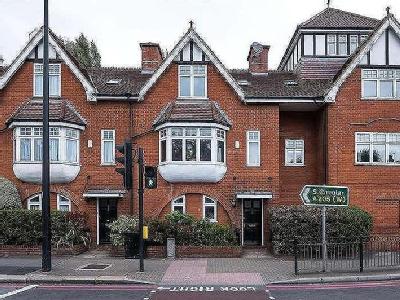
2_bed_terraced_house_for_sale_107505656495785792


The Secrets She Keeps was one of those unfortunate books that I really liked till I didn’t. To have an experienced thriller writer working ‘chick-lit’ or ‘women’s fiction’ (I always feel that I’ve climbed over the fence into the back garden when I read a domestic, a genre I quite love) is an original treat & Robotham (a very easy name to remember – I always think of R2D2 + a smoked porcine leg joint) does the job quite up to Tammy Cohen or Julia Crouch standard. For about the 1st half – till the baby disappears, I was wholly engaged. But then the story sagged. Desperate remedies to keep our attention, such as making baby get sick (remarkably recovers without treatment when that that hook is surplus to requirements) & producing new characters out of the villain’s backstory on demand, including an inconvenient ex, a mum, & some unpleasant Jehovah’s Witnesses, all failed. In the final section, the author reverts to his default genre – thriller mode. The Imperial War Museum & the Greenwich Maritime Museum were nicely prepared early in the story to be used later, as was the firearm needed as a prop. Somewhere in the story the villain’s unpleasant boyfriend also acquired a commission as an RN officer, but we’re not told his rank. There was also an unnecessary (& unpleasant) pair of adulterous liaisons provided that were wholly gratuitous and unrelated to the missing baby plot. But my principal difficulty was with the villain, who obviously is several sandwiches shy of a picnic but is required by the plot to be a brilliant schemer, a magnificent actor capable of keeping a cool head in a crisis and a genius at disguises. Surely anyone with such gifts and talents could manage a better career than stocking shelves in a supermarket. Yet also too clueless to have a plan in place if asked the name of the baby’s midwife or GP, or provide a convincing place of birth. So I’d rank this one as a high three star. Once again, I let appetite & impulse carry me away and broke my resolution to eschew throw-away fiction & to spend time only on books with characters worthy of love & attention.


Review of His Bloody Project, by Graeme Maccrae Burnet

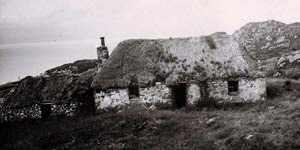
His Bloody Project is such a gripping read that it was hard for me to believe that it was a Booker Prize nominee, a category I associate with works one carries about to impress one’s acquaintances who follow ‘literary fiction’ & the LRB, rather than to read for pleasure. It has a couple of features of the breed, tho’. The author appropriately mentions Foucault in his afterward and the criminal psychiatry is indeed ‘degree zero’ – criminal types categorised by the physiognamy & heredity. (I wonder how many categories we now use every day to classify people – especially racially & sexually – may seem equally bizarre 150 years from now.) And readers are left in some doubt as to what was ‘really’ going on in the mind of the murderer, revealed in what he doesn’t mention in his confession, particularly his sexual attraction towards one of the victims. As a historical, the book is brilliant. The incredibly bleak life of a crofter in the Scottish isles comes through powerfully because the narrator never seems aware of just how deprived he is, even though highly literate. I loved the way characters were referred to by nicknames – ‘Kenny Smoke’ ‘Black Mccrae’ ‘Lachlan Broad’ – a feature of highland culture where many share the same Christian name and surnames. Which brings out my only problem with the book. As I was reading Roderick Mccrae’s account, I kept thinking, ‘These characters ought to be speaking Gaelic.’ Actually it turned out that much of the time they were. I think were it my book, I would have tried to indicate which language was being used, perhaps with spelling of proper names & syntax. (Some of the terms in the useful glossary on p. 158 are obviously Gaelic, but others are Scots.) But that was my only caveat. This is a marvellous novel. It’s fascinating that the best historicals I’ve read recently have been set in remote parts of the United Kingdom in the reign of Victoria – Emma Donoghue’s The Wonder in Ireland, Katherine Stanfield’s Falling Creatures in Cornwall, and now Graeme Macrae Burnet’s His Bloody Project in the Scottish isles. In all three, the ‘Christian’ religiosity, whether Roman Catholic, Methodist or Presbyterian, is superstitious, oppressive & serves only to make the lives of the characters more miserable. All three also feature a traditional Celtic spirituality (I wish Roderick’s sister Jetta’s role had been larger) hovering in the background that gives the stories an eerie touch.

Review of Cottonmouths, by Kelly J. Ford

15072746860_b75472c43f_b

One of the blurbs on the back jacket refers to Cottonmouths as “a Southern gothic, but I could imagine transposing it to Iowa with only a few landscaping changes. Emily received a college scholarship to escape the appropriately named Arkansas small town of Drear’s Bluff somewhere near Fort Smith, but succeeded only in flunking out her first semester with a pile of student loans to pay and no prospects of a decent job. She is also back in the company of Jody, the BF and lover of Emily’s teen years. Jody has morphed into a single mom living on a run down chicken farm in the boonies. Where the chicken house is being employed by low-lives for practical chemistry.

From a literary POV, I found this book excellent. With only a few closely observed characters in a very restricted setting, Kelly Ford tells a powerful story of the effects of an all-consuming devotion to an unworthy beloved. Jody is a habitual liar, tho’ as we see her only through Emily’s eyes (while she still had both of them), whether to classify her as a narcissist, a sociopath, or just a self-interested manipulator remains uncertain. The older inhabitants of Drear’s Bluff have lots of religion & zero spirituality. The meeting of the prayer circle in Emily’s mom’s kitchen—where the intercessions serve as cover for malicious gossip—was brilliantly drawn. The style never calls attention to itself, but it feels spot on.

As I am drawn to young women who carry pistols in their bags (in storybooks, that is), I really wanted Jody & Emily to take us along of a wild ride, especially as we are not disappointed by the literally explosive possibilities of pursuing the manufacture of home-made pharmaceuticals. For me the ending was a bit too sensible and vanilla, tho’ it was gratifying to see how Emily’s parents emerge from the story. For readers who don’t mind a tepid conclusion, this is a well-crafted tale of a dangerous liaison.


Review of Last Seen, by Lucy Clarke


When the author of our best book of its year releases a new offering, we greet it with overwhelming enthusiasm, & equal disappointment when we miss the old thrill. I loved The Blue, & whilst I’d not say I exactly hated Last Seen, just compare a fifty-foot offshore sailing yacht with a beach hut. We go from a book seriously comparable to Joseph Conrad’s to the world of . . . well, beach-reads. Not that this one is lacking in the qualities sought by beach readers: adultery, betrayal, teen pregnancy, who’s your dad stuff, BFs who are worst frenemies, a 1st person narrator who loves to jerk you around by letting it slip that she’s got a secret she’s saving for the denouement (how do 1st-person narrators know they are characters in a story book whose job is to keep readers in suspense by withholding the truth?). I’d also award a prize for the most unlikely boys’ names: Jacob & Marley. Apparently nobody in this book had read Dickens or seen the movie about a cute dog. Tho’ as Marley is supposed to have perished seven years ago in a swimming accident (I’ve never enjoyed swimming as a recreation – as opposed to being a way of saving your life should you fall in the water), his ghost indeed haunts his mother Isla (I am not making this name up) & her supposed BF Sarah (shouldn’t it be Rebecca?), mother of Jacob, his boyhood friend. I found Jacob a thoroughly nasty piece of work long before the secrets come out – his treatment of his girlfriend & of his mother was abominable – but remembering he is but 17 must make allowances. How often when we think back on our own childhoods and teen years do most of us not feel an immense sense of guilt – with just a little more bad luck we could have done serious harm. Often I ask myself, “Could I have done something as sleazy as that?” Yes, actually.) Like Sharon Bolton’s Little Black Lies, this book is a superb study of the destructive effects of nourishing chronic grief & also about lying. If these characters had told the truth in the 1st place, they’d have faced some very embarrassing situations, but perhaps emerged as morally better people. Unfortunately, beach combing brings out the inner slacker in all of us (these characters spend most of their free time – they don’t have anything else to do – smoking both funny and regular cigarettes and drinking). Whereas sailing an offshore yacht brings out our better selves, every relationship is a threesome because it includes a very high maintenance relationship with the boat.)

If you compare the photo above with the picture of the sailing yacht accompanying my review of The Blue, you will see how inferior a book this one proved to be.

Tho’ very disappointed, I found as a suspense novel the final chapters of this one to be un-put-downable & as a animadversion of what not to do in your relationships, Last Seen morally admirable. So I’m not sorry I read it. But please, Lucy Clarke, get off the beach & back on the boat!

Review of Rescue Me, by Michelle L. Teichman

maxresdefault

This is basically an attractive but tediously extended romance plot combined with a sometimes distastefully violent thriller story (the boxing match between Kristen and a really nasty male cop who was much heavier was hard to believe as well as painful to read). Rescue Me led to my thinking again about the whole matter of requesting Advanced Review Copies. The problem is that when you get them, you have a moral obligation to read them all the way through and to write a competent review. Both can be difficult even when you actually liked the books. And when we don’t, they’re an enormous chore, especially for a book as obviously well-intended as this one. Michelle Teichman is never pretentious or silly—the two vices that license release of my inner wasp-nest of snarkies. The description in the blub made this book very appealing to me both for characters and setting. Ashleigh is an EMT—a discipline I enormously respect and admire—and Kristen an undercover police officer, my very favourite kind of main character, in this case a RCMP sergeant disguised as a newly seconded constable to ferret out corruption in the Toronto metropolitan police force. And as these days I read crime fiction as much for the outcome of the relationships as for the solution to the mystery, and Ashleigh and Kristen are such attractive characters, I expected to enjoy this one very much. The problem is not in getting them together; it is that the author creates seemingly endless blocking situations and misunderstandings to keep them apart. Practically right out of the chute there’s enough chemistry between them to make BSAF look like a damp squib in comparison. Ashleigh’s problem is that she’s had but one previous relationship with another woman and was badly burned by getting the el dumpo. Kristen has a terrible reputation for turning her lovers over so fast her hook-ups could be timed with a stopwatch. In order to stretch the book out, tho’, the reader has to wait till about half-way through to find out what it is in Kristen’s past that made her so afraid of emotional commitments and to feel herself unworthy of a caring and lasting relationship. And we are exactly 2/3 through the book before their attraction reaches consummation. Then after that we get a thriller ending and find out who the crooked and repulsive Toronto cops are and what they were up to, though by then I didn’t much care. But I had done my duty and finished the whole book.