
I wish Anne Perry would write a memoir telling what it was like to have been Juliet Hulme & what the friendship with Pauline Parker felt like from within. Of course it’s Perry’s life & it’s obvious she prefers to sink Pauline & Juliet & the entire episode into oblivion. But that tragedy so long ago & far away will continue to haunt us. Anne Perry & the Murder of the Century – I much prefer the earlier title So Brilliantly Clever: Parker, Hulme & the Murder that Shocked the World – seems as good an account of the case from an external factual & legal POV as we are ever going to get. Unfortunately a society has to deal with such an event & the persons seen to be responsible according to its own cultural values, which in 20th-c. New Zealand meant a criminal trial to determine whether the girls were guilty or innocent. As there was no question that the girls had killed Pauline’s mother deliberately by striking her head with a stocking containing a brick, the only possible defence was for their counsel to try to prove that the girls were insane, & given the very narrow definition of insanity that Anglo-Saxon jurisprudence requires, not surprisingly they failed. For me the girls were not insane, but they had travelled far beyond our criteria of legal guilt & moral evil.
‘I finally see . . . that guilt & blame & responsibility aren’t the same things at all. They’re not even close,’ Natalie Haynes has her narrator remark in a novel also about a teenaged murderer (The Amber Fury, p. 105). That sums up my perplexity about the Parker/Hulme case – that our legal & ethical concepts of guilt & responsibility seem somehow irrelevant to something that could be the subject of a tragedy by Euripides. One might as well ask whether Agave & her sisters were guilty of the death of Pentheus in the Bacchae or Medea of the death of her children. A different, perhaps more ‘primitive’ culture might well had seen Gina & Deborah (as the girls had restyled themselves) as under the control of powerful daimons & been conveyed to another world where the ultimate value was preserving their relationship, which they thought they could save by killing Pauline’s mother.
Gina & Deborah constructed their own private mythology, largely out of bits & pieces of contemporary popular culture, tho’ very high quality popular culture. Among their icons were James Mason, Orson Welles, & Mario Lanza, & such films as The Prisoner of Zenda & The Third Man. Conceiving how their imaginary world collided with what we call ‘reality’ is almost like fancying the Brontë sisters murdered their father Patrick – with Emily as the ringleader! Gina even had a name for their imaginary realm, the Fourth World.
Peter Jackson’s film Heavenly Creatures, the name given the girls in one of their poems, comes as close as anything we have to letting us see what it would be like to live in the girls’ world, with the film’s strange prosthetic dancing statues representing the divinities in the girls’ pantheon. But we can hope that someday a truly excellent imaginative writer will base a novel on this story. I imagine it might be something like Donna Tartt’s The Secret History or Tana French’s The Secret Place, but even more beautiful & eerie.
Author: billkupersmith
Review of The Drowning Girls, by Paula Treick DeBoard

The Drowning Girls (BTW, only one girl actually comes to a bad end) is like those fake meringue pies you see in the bakery shop windows or the plastic meat @ the butcher’s stall, alluring till you actually take a bite. Yet I could not stop listening to the audible: I had to find out how this one ends. Specifically, to discover what happens to Kelsey, the nasty girl in the story.
Except in the areas of plot, setting, characterization, and especially literary style, Paula Treick DeBoard has mastered her craft. Let me take each in turn:
Plot: an apparently disturbed 16 y/o hottie named Kelsey is inflamed with lust for Liz’s husband Phil, an Australian (tho’ his nationality plays no role @ all in the story). Liz spends most of the book consumed with suspicion of infidelity. He is supposed to have texted Kelsey an indecent photo showing Phil displaying himself next to his pool, & Kelsey manages to steal a kiss from him in his office. As Phil & Liz are unable to trust each other, Kelsey’s infatuation leads to estrangement. The author keeps foreshadowing a violent denouement that I shall not reveal, but as it could have occurred anywhere in the story, is hardly an ingenious resolution. We also have a large and vicious mountain lion in the story, & I was reminded of Chekhov’s famous axiom, that if the set includes a gun hanging from a wall, it should go off before the curtain drops. So let me warn potential readers: tho’ Kelsey spends lots of time outdoors @ night spying on Phil, if you’ve read Tom Sharpe’s Blot on the Landscape & hope for something similar, you’ll be disappointed.
Setting: The story is set in a “gated community” in Northern California called “The Palms.” Although Liz, a public high-school counselor who grew up in Riverside, is clearly dying of class envy, the inhabitants are but middle-class. The folks Liz feels ashamed to associate with drive Mercedes, BMWs, and Lexuses, not Bentleys and Ferraris, and have such ordinary occupations as lawyer (Liz’s husband Phil apparently thinks calling a lawyer “an attorney” makes them both upscale) and doctor: not hedge-fund CEO or dot.com millionaire. Playing golf in checkered trousers or taking their daughter to Rome for Christmas week is their idea of recreation. Nobody races a yacht in the Trans-Pac or even seems to have a condo in Vail. Everybody lives in a new house, not a San Francisco Victorian. Liz’s kitchen contains a “peninsula”—I wondered if that was a way of telling us the kitchen was so big that Italy or Spain and Portugal would fit into it, but eventually I figured out it was some kind of protruding counter-top.
Characters: Tho’ Phil was reared in Australia and therefore ought to be familiar with the intricacies of cricket, he likes to watch San Francisco Giants baseball, which for a cricket fan is like Boris Spassky’s observing a game of checkers. His bedtime reading is a snails-pace perusal of a biography of John Adams, tho’ we are never told why he is supposed to care (not so much) about early American history. Liz had an unplanned pregnancy @ 19 resulting in dtr Danielle, now 15 & a science geek @ a high school that in Liz’s reader’s pronunciation sounds like “Mars Landing” (couldn’t decide which was more unpleasant, the California voice given Liz or the Australian voice of Phil’s—both grated on my ear). Tho’ Liz takes pride in her “professional” standing, @ one point she plays a very sleazy trick to get unauthorized information about Kelsey from one of the girl’s former teachers @ another school. For me, that was something that should insure the perpetrator never worked again in education. (Ironically, Liz gets in trouble instead for something she didn’t do.) I keep wondering if I would have fallen for her ruse when I was a teacher. I fear if she caught me on a really stupid day, she might get away with it. But if I had any of my wits about me, I would have asked her number to phone her back @ the agency she claimed to be representing.)
Style: “It was less like a kiss than a near death experience” and “The ends of the head of romaine stuck out of the bag like an alibi.” These were my absolute favs. But it was also striking how in Liz’s idiolect the imperative mood is signaled by the oft prefixed phrase: “You need to” as in “You need to come out here @ once.” (This form of the imperative – pretending grammatically to be a declarative statement about the addressee rather than a command – is also a favorite of bullying police officers as well as parents.) I’d have expected a bright teenager such as Danielle to be very tempted to reply, “I don’t need to do f-bomb all; if you want me to something, just say so.”
Characters: We’ve already got Liz & Phil’s numbers. Danielle is a fairly attractive character except for her response to being (falsely) shamed on Facebook as a lesbian (these days I’d hope for “honi soit qui mal y pense” from a feisty teen) & general subservience to her bullying mother, tho’ she finally asserts herself by getting a tat. (Generally I don’t like tats, but Liz’s discomfiture made me want to stand up and cheer.) Of the minor characters, Liz’s mother in Riverside (referred to as “mom”) is blind, tho’ that fact plays no role in the plot, and her sister Ellie, who lives in Chicago, knocks herself out to be a character by having a snake tat around her upper arm. (Not surprisingly, her attempts @ internet dating keep coming up with losers!) But the biggest failure @ developing character lies in Kelsey the villainess. The author makes no attempt to explain or account for her obsession with older men. We would expect @ least some elementary attempts @ family dynamics & an exploration of her relationship with her father, but she remains simply a stock villainess spoiled rich girl.
I have given this turkey much more attention than it deserves, but I still cannot explain why it kept its grip on my attention. Part may be that it still works on the archetypal level. One of the principal criticisms of Northrop Frye’s system is the absence of quality control. In this case Paula Treick DeBoard’s book probably attracted me for the same reasons that I found Megan Abbott’s Dare Me amongst the best school stories I ever read. A good author could have given us a Kelsey of the caliber of Beth Cassidy. But the difference is in the substance.
Review of Swimming Lessons, by Claire Fuller
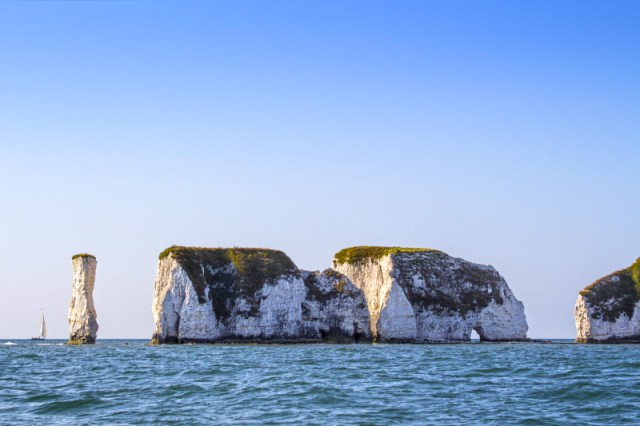
It’s the 1970s. Student has affair with her creative writing teacher. Happened all the time. Gets pregnant. Happened. Has baby. Happened sometimes. Teacher marries student. Happened somewhat often. Teacher gets sacked by dean. Happened never. Without reflection or effort of recall, I can think of six such instances amongst senior members of my department whilst I was still an assistant professor – resulting in four marriages, four children (one set of twins), and zero firings, tho’ not too long afterwards the father of twins dropped dead of a heart attack on the day of the department Christmas party. His “celebration of life” service @ the Unitarian Church is still one of my treasured memories, esp. when the ‘mourners’ were invited to share their recollections. The ex disappointed us by remaining silent. In Swimming Lessons we hear a lot from the wife, a Norwegian named Ingrid, tho’ rather than divorcing her sleazy creative writing husband, she apparently drowned instead. (There is the alternative possibility that she may be still alive.) The main story takes place in the present, on the Dorset coast near “Hadleigh” (i.e. Bournmouth), apparently Studland beach, where the family of Gil the creative writer inhabit a swimming pavilion absolutely crammed with books. Gil didn’t collect the books to read the texts, but for their marginalia; he’s especially fond of puerile drawings of penises and vulvas. His twenty-something daughter Flora has an equally puerile (puellile?) amusement of drawing innards like the bones and intestines on the naked body of her lover Robert with a permanent felt tip. She has an elder sister Nan who is ten years older and is a nurse and actually has some sense tho’ she’s rather a scold. But the backstory is related by letters to Gil written in the summer of 1992 by Ingrid, basically retelling the history of their relationship, revealing Gil’s infidelities and her difficulties as a mum bringing up two girls with a feckless husband. There is also a revelation that most readers will be expecting. The tricky innovation in Swimming Lessons is that Ingrid’s letters are concealed in the huge collection of books, letters intended to be found later by Gil. The cute part is that the contents of the letter is keyed loosely to the title or subject of the book in which it’s hidden. For example, an account of how she fights off a rapist on the beach is concealed in a copy of Warne’s Adventure Book for Girls. This may strike some readers as clever; I found it silly.
This was a book that I really wanted to like. That the characters were so dislikeable was not a problem, but it was that they weren’t either original or interesting. Gil is the standard sleazy adulterous burnt-out foul-mouthed fictional failure – how many have I seen come through the Writer’s Workshop in Iowa City? Flora is the usual precious daughter with a father fixation – no surprise that she responds to his having pancreatic cancer with denial. Robert’s a book-store clerk adoring a famous writer – another stock Iowa City fixture – who doesn’t deserve his fame. Maybe what put me off as well was the setting. Beaches bore me. Tho’ unlike Robert I can actually swim, I regard natation more as a means of saving one’s life if one falls into the water than a recreation. If the setting were used for what God intended it (I once had the good fortune to do Poole Week), I might have liked the story better. Some readers may enjoy Swimming Lessons, but I doubt I’m the only one to find it very tedious
It makes me feel so bad to write such an unenthusiastic review. I loved Claire Fuller’s Our Endless Numbered Days. But that novel had an extremely attractive main character and left the reader with many fascinating speculations and moral and ethical dilemmas. I am so hoping I live long enough with my wits about me to read a sequel someday. Claire Fuller is also a fine blogger, a great Tweeter, introduced me to WordPress, and likes Morris Minors as well. So I promise eagerly to await her next effort, and hope the old magic returns.
Review of The Dry, by Jane Harper

Aaron Falk, a police detective from Melbourne, returns to his boyhood home of drought-stricken Kiewarra for the funeral of the family of Luke Hadler, his boyhood mate. Apparently Luke had blown his head off with his shotgun after first killing his wife Karen & their son. Twenty years before, Aaron’s father had taken his son and fled to the capital, pursued by Mal Deacon, the father of Luke’s & Aaron’s teenaged friend Ellie, who seemed to have drowned herself, leaving a note with the word ‘Falk’ written on it. Later, in a book Karen had borrowed from the library, Falk finds a note with the word ‘Grant’ & his own phone number. Grant is the name of Mal’s nephew, now Aaron’s principal persecutor. Jane Harper’s employing two ambiguous notes as clues brings out the strengths & the weaknesses of The Dry: telling economy of force, clues obscured with the simplest of misdirection, & ultimately a villainous plot too complicated to work in real life. The last need not be fatal artistically – I’ve read The Likeness four times – but it is that the more I learnt of the villain’s motive the less persuaded I became. After finishing a five star, you want to read it again, sometimes immediately, sometimes after it’s had time to settle. With The Dry, @ about 48 hours the fiction dissolved & the psychological improbabilities multiplied. As is common now, we’re given bits & pieces of the backstory in italics. Especially striking was this gem. Nerving up to do the deed, we’re told the villain was ‘whispering up a silent feverish prayer’ & as the victim approaches, the villain ‘sent up a silent prayer of thanks.‘ I nearly fell out of bed. Which god was the villain praying to – Kali? Except for Thugs & members of ISIS, who ever prays before committing serial murder? I went back over the longest colloquy the detective has with the eventually found out villain, and discovered no suggestion @ all that the killer was the kind of person who might perpetrate such an atrocity. Leaving aside religious maniacs, we find such murders are either accidents such as a robbery that ‘goes wrong’ or committed by thrill-seeking sociopaths as in ‘Funny Games’.
Many other psychological & spiritual shortcomings popped up on reflection. Even given that Mal is a senile nasty old idiot and Grant a mean drunk, their continued persecution of Aaron Falk is ultimately inexplicable & given the drought, filling his car with liquid shit a waste of water. Some of the clues seemed very arbitrary and based too much on coincidence – do all Australians choose shotguns with identical bores to blow away bunnies? A more spiritually & emotionally satisfying book would have made the tragic Ellie the principal character. That we don’t feel she haunts Aaron’s memory betrays his lack of empathy & failure to love. True, 17 year-old boys don’t do relationships – a good reason not to use their POVs if you’re seeking emotional depth. (A fault shared by J. D. Salinger & John Green BTW.)
Settings & descriptive passages, tho’, are excellent. The Dry reminded me constantly of Sharon Bolton’s Little Black Lies. Both movingly depict small communities under great stress & characters dealing with grief & unresolved problems from their pasts. In both the very landscape becomes a principal actor. As I’m a sailor not a farmer the Falkland Islands resonated better for me than the outback of the State of Victoria, tho’ I grew up in Texas & live in Iowa so I have some notion of what a drought & a farm crisis feel like, (I’d like to have listened the the audio for the voices – Australians basically strike me like Texans who talk like Bostonians – wearers of big hats who pronounce ‘khaki’ like what you use to start your ‘cah’! (I once saw the word spelled that way on a panel beater’s shop in Melbourne.) Perhaps Jane Harper should switch to nonfiction – I could imagine her in the same class as John McPhee. But as a fiction writer she doesn’t come near authors such as Tana French or Sharon Bolton, whose characters you love & care for & who raise moral & spiritual issues of complexity & poignancy. But The Dry ranks as a solid four-star, an excellent one time read. Most four-stars I find fast one-time reads; this one is slower & such a good read as to be worth the effort – once. Whilst I’ve heard future exploits are envisioned for Aaron Falk; I fear I shall be otherwise engaged.
Review of The Most Dangerous Place on Earth, by Lindsey Lee Johnson

Personally I’d not class this as a YA (tho’ highly recommend it for younger readers) because an OA like me can not only enjoy it but bring a maturity & historical perspective. Back in the 1970s a delightful work of satirical fiction first appeared in Northern California as a series in a local newspaper, which was collected under the title The Serial: A Year in the Life of Marin County. The author was Cyra McFadden, who was later to publish a memoir of her own chaotic upbringing by nomadic & somewhat alcoholic parents. Her characters are on the cusp of middle-age, who still think like teenagers themselves even tho’ they are already parents of teenaged children–who might be “living with some turkey in a yurt.” McFadden’s characters may belong to “the Radical Unitarian Church” & subscribe to every New Age practice & belief: EST, Rolfing, T-groups, the Eslan Institute. I found myself reflecting back on The Serial as I read The Most Dangerous Place on Earth, set @ Marin High School, because the characters in The Serial would have been the grandparents of these students. Tho’ these young people enjoy every material luxury–their parents bribe them to get high grades with BMWs & unmaxable credit cards–they inhabit the moral & spiritual equivalent of a toxic waste site. The spirituality in The Serial was utterly bogus, but @ least there was a spiritual dimension in the characters lives. These students, their teachers, & their parents believe in nothing @ all except getting them into an elite college.
Despite their nihilistic world, some try to behave decently. Molly Nicoll is a new English teacher from lower middle-class Fresno who wants to help her students develop. Calista Broderick is one of Molly’s best students, carrying a load of guilt because when in the 8th grade she took part in online bullying a class geek into jumping off the Golden Gate Bridge, riding the entire distance on his bicycle. Calista ends up befriending a group of slackers who seem to be only characters with any authenticity. Abigail Cress is seduced by another teacher, Doug Ellison. When rumors reach her parents, he cowers & she covers for him, telling him: “I wanted you to know . . . I could have told them, & I didn’t, & I still could. If you ever try to talk to me again.” That was for me the most chilling and revealing moment in the book. All the guilty teacher had to do to redeem his stature as an honorable man would have been to reply to Abigail: “Tell your parents & the principal the whole truth. Your respect & my honor are worth infinitely more than my marriage & my miserable career. I loved every moment we were together, & I shall never regret our relationship.” I am not @ all sure that I’d have the courage to do that myself, but I know the right choice wouldn’t take long — speak three sentences.
But the most painful episode for me as a former teacher was when Molly was called to the principal’s office for taking too much interest in the welfare of her students. She’s told: “There have been some questions raised by certain members of the staff, questions about your pattern of behavior. It seems the tone that has been set in your classroom, I mean as far as student learning objectives are concerned, has not been especially productive.” That jargon-laced reprimand is bad enough, but it continues: “These are not your kids. These are your students. Last year they were someone else’s, next year they’ll be gone. You can’t be their mother. You certainly aren’t their friend. You are the person who gives them grades. And if you go on caring for them in this way you won’t survive.” Molly takes the lesson in professional standards to heart. When later when Caly asks for her comments on a very moving confessional essay about her part in having helped drive that student to jumping off the bridge, Molly treats it impersonally as a work of fiction & confines her comments entirely to matters of organization & style. I term what happened to her “professional deformation” & unfortunately it is the norm for “educators.”
The Most Dangerous Place on Earth fails to be a complete artistic success. Dividing the story among too many characters made it difficult for me to care enough about any particular one of them, so I never felt I’d really got to know how she would feel. Except for the boy who committed suicide early in the book, none of the boys captured my sympathies at all. It should have bothered me that the outstanding athlete ends up a male prostitute in Los Angeles, but it didn’t. And the boy who hired a ringer to take his SAT exam was equally fatuous. (BTW, the ringer’s formula for an outstanding essay wouldn’t work in real life–examiners really can identify the distinctive features of anonymous essays.) But my strongest reason for recommending this book is what it tells us about American education. Why would parents be content to send their children to schools that teach them to believe in nothing except worldly success and be concerned only that they get accepted by elite universities, bribing them with expensive cars, clothes & accessories to get high grades & score well on entrance exams. Why not instead spend the money to send them to good secondary schools that would provide a moral & spiritual formation, & then let them attend a much less expensive & prestigious public college? It seems counter-intuitive.
I am most grateful to PenguinRandomHouse & NetGalley for a gratis ARC.
Review of Exit, Pursued by a Bear, by E. K. Johnston

Reading Exit, Pursued by a Bear, I was haunted by continual recollections of another sch ool story about a cheer captain, Megan Abbott’s Dare Me. Judging from the reviews on Amazon, we see Dare Me provokes equally extreme reactions from readers: half love it & half hate it & I expect many who hated Dare Me would love Exit, Pursued. In Dare Me the principal character, Beth, is an indomitable Nietzschian determined never to yield to anyone. Ironically, because Dare Me is a tragedy, Beth’s unshakeable will leads to her becoming in the end a victim herself. Hermione in Exit, Pursued is a seeming victim who refuses to allow herself to be used like one; after being drugged and raped @ cheer camp, she receives the support of an entire community, police, doctors, nurses, parents, BFs, psychiatrist, even a clergyman, who is okay with her decision to have an abortion.
The differences in flavours between Dare Me & Exit, Pursued emerge clearly in the speeches the captains deliver to their squads just before they go into competition. Both speeches work like Henry’s “we happy few” before the battle of Agincourt in Shakespeare’s Henry V.
This is Hermione, as the Palermo Heights Golden Bears prepare to perform in the Canadian nationals: “Listen up. . . . This is our day. We didn’t have to come across the country or even that far across the province, because this is our day. We’ve practiced for this and trained and thought. . . . Each & every one of you chose to be here. You all chose to try out when the competition was stiff. You chose to give up ever sleeping in so we could practice in the mornings. You chose to limit your social life. You chose to make your teammates your friends as well. And you chose today. I’ve asked a lot of you all on the floor & off this year. And I’m going to ask one more thing. . . . Choose to go out there with me one more time. Choose to do your best. Choose to trust your team. Choose to win, & I know—I know—we can.”
And now Beth @ the Sutton Grove Eagles last game of the season; they’ve learned that a scout from the regionals is in the stands: “Tonight, you’ve got to spill their blood . . . or I promise you, they will spill yours. . . . Brace those arms. Bolt those knees. Look at that crowd like you’re about to give them the best piece of ass they ever had. Sell it. . . . Bases, eyes on your Flyer, she is yours. You lock her to your heart. You lose her, blood on the mat. She is yours. Make her. . . .You fail, you fail all of us. So you will not fail. . . . So stiffen the sinews, summon up the blood. We’ve come to bury them. We’ve come to plow their bones by the final bell. . . . It’s harvest day, girlies. . . . Get busy when the corn is ripe.”
If they were wines, Dare Me is one of those over-oaked powerful Napa high-alcohol Chardonnays with the punch of a depleted-uranium armour-piercing anti-tank round. Exit, Pursued is a light smooth Riesling. I enjoyed both. I read somewhere that Megan Abbott got her original idea for Dare Me to try to set Macbeth in an American high school, tho’ practically no traces remain except for the principal character’s first name. Hermione’s name & the book title are allusions to The Winter’s Tale, one of Shakespeare’s later plays that we classify as romances. Tragedy portrays a world that is cruel, excessive & merciless, yet inevitable & right. Appropriately for a book set in Canada, as I was reading Exit, Pursued the presence of the famous Toronto critic Northrop Frye was constant visiting spirit. What makes stories like this romances is that what appear to be tragic resolves happily, the villains are punished but mostly offstage and the apparent victims saved & the lost recovered. If you like, you could say that romance portrays the world as it ought to be. For Frye & for me, the perspective is essentially Christian in that evil is made to reveal a greater good.
Some readers hated Beth but I admire her will & her resourcefulness & courage. Sometimes I thought I found Hermione bland, but actually she is very courageous too. Fortunately the author E. K. Johnston portrays a small town in Ontario as part of a society that offers a good system of support of Hermione, & in Polly Hermione has a BF who is everything you could ever want in a friend, whereas Beth’s BF Addy will betray her. That’s the difference between the worlds of romance and of tragedy. But Hermione & Beth are both inspirations & models. When you’re facing something horrible but have family & friends & caregivers, ask yourself what Hermione would do & then get up & have the strength to do it. But when you’re all alone, no one has your back & there’s nothing before you except the abyss staring @ you, do what Beth would do – don’t let the abyss intimidate you, you intimidate the abyss.
Review of At The Existentialist Café: Freedom, Being, and apricot cocktails with Jean-Paul Sartre, Simone de Beauvoir, Albert Camus, Martin Heidegger, Edmund Husserl, Karl Jaspers, Maurice Merleau-Ponty and others, by Sarah Bakewell
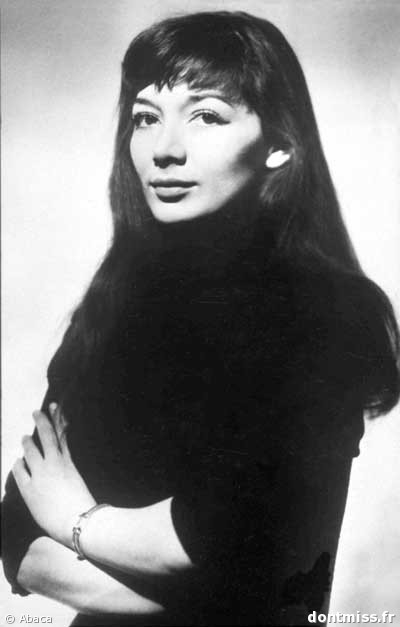
At the Existentialist Cafe was an almost ideal nonfiction travel audio book, a marvellous example of what the French call haute vulgarisation, which means not upper-class swearing, but writing about complicated technical subjects in a style that even someone as thick as myself can follow. This book is a great introduction to the thought of Martin Heidegger, @ least for me, whose previous knowledge of Heidegger was a picture of an old fellow in funny clothes sitting on a bench in a forest. Finally too I think I understand where Husserl fits into the history of philosophy & why he is important. Like Sarah Bakewell, I discovered Existentialism while still @ school, but unlike her I also learned early on that I had no philosophic mind. What appealed to me about Existentialism was the fantasy of hanging about on the rive gauche with girls in black tights whilst wearing a black roll neck jersey. (As the photo above of Juliette Greco illustrates.) My BF @ school was an even bigger fan than I; when Albert Camus was killed in a car smash (not just a car smash, a Facel-Vega smash!), he wore a black necktie in mourning. Still, by the time of the evenements of ’68, it felt like JPS had passed his sell-by date. So for me this book was less a history of a philosophic movement than a chance to revisit the world of my teenage self. But it also gave me @ least some idea of what my grad-student friends were talking about then. One had DASEIN on his licence plates. A young woman friend recommended de Beauvoir’s The Second Sex, tho’ given my tendency to fall in love with women whom I knew to be smarter than I, it wasn’t exactly eye opening. Sarah Bakewell seems to consider that book the most important product of the entire Existentialist programme, & given its huge presence in the feminist movement, she may well be right. But it still feels to me very much an autobiographic memoir by a woman who had been an upper-middle-class jeune fille in the early 20th century, not all that applicable to American women even in the ’60s. But who am I, a male, to comment? Having no capacity for strenuous thought, I feel equally out of my depth commenting on the other Existentialists, but Levinas, Jaspers & Marcel felt like the most worthwhile & morally & spiritually rewarding. I can also see why Merleau-Ponty’s ideas would be attractive to film makers. As for JPS himself, I’m still inclined to think him essentially (yes, I had to use the dreaded ‘E-word’) a fraud, but one who truly believed his own fabrications. All of his own idols turned out to have clay feet, the Soviet Union, China, l’Indochine, Algerie algerienne. Now that Castro is gone, how soon will Cuba succumb to capitalism like China & Vietnam. It was as if Sartre spent his career in search of the cause du jour, to find where the crowd was going next so he could get in front of it. From April 1940 to August 1944, the period of the German occupation & probably the worst in Europe since the Black Death, Existentialism was perhaps the only thing going for a decent human being & given the total failure of the Roman Catholic Church under Pius XII, atheism was the only viable form of belief, except in the extreme forms of Christianity to which martyrs such as Simone Weil & Edith Stein were willing to go. I’m still inclined to the view that Existentialism belongs more to the history of culture (maybe even as in my case, the history of fashion–Bakewell is great on the jeunesse’s passion for American lumberjack shirts) than to the history of philosophy. But as another recent adventure in time travel, The Existentialist Cafe is an absolute delight.
Review of Untouchable, by Sibel Hodge
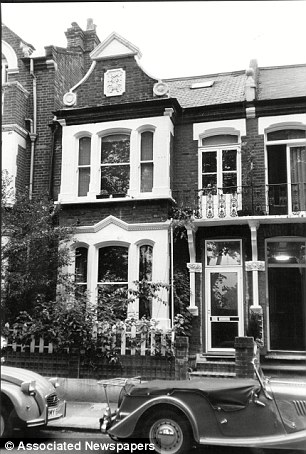
Untouchable is the third crime novel by Sibel Hodge that I have read & enjoyed after Look Behind You & Where Memories Lie. All deal with current issues: domestic abuse, dementia & now child sexual abuse. The word ‘enjoy’ seems inapt for such subjects, but as Aristotle taught us, we enjoy good artistic imitations of things that are hideous to experience in reality, & I found that to be the case with Untouchable. Initially I hoped that the author was exaggerating & such a horrible pattern of systematic mistreatment & exploitation of children could scarcely have occurred in a civilised country in our time. To be disabused of that comforting illusion, all that was required was simply to type the words “Elm Guest House” into Wikipedia. (The lovely 4-seater Morgan motor car doesn’t deserve such an evil location, but I couldn’t resist showing it.) The chief pleasure in reading this book is the moral & spiritual satisfaction of seeing the perpetrators punished as the result of the efforts of the main character, who starts by trying to find out why her boyfriend Jamie should seem to have killed himself just as he on the verge of proposing to her.. As in the previous novels written by Sibel Hodge that I read, she creates very appealing principal characters who despite feeling overwhelmingly threatened & inadequately equipped to deal with the evils they encounter, yet press on, not so much overcoming their fears than simply doing what is right despite them. Maya is a character I so liked & admired.
Much as I admire the moral & spiritual quality of Untouchable, though, and am grateful to the author for her sensitive treatment of this horrifying subject, I cannot join so many of my Goodreads friends in awarding the full five stars. There are simply too many artistic flaws. But as happens with good but imperfect stories, we can learn from the faults. Giving the very ordinary main character a sidekick who is an ex-SAS soldier with all the physical & technical skills and equipment (night vision googles, Glock pistol, etc.) to inflict mayhem on the perpetrators seems like cheating & makes things to easy both for Maya & her creator. Most of the evildoers, especially those in high places, are little more than names, particularly the final villain. Were I attempting a story like this, I would endeavour to introduce these characters earlier, and tho’ their crimes can’t & shouldn’t be mitigated or excused, I’d try to show them as @ least human, however depraved their appetites, perhaps some with families & children of their own. Plot also needed some work. When we reach about 2/3 of the way, we know everything about what happened, so it’s just a case of going into thriller mode to wait for Mitchell the ex-SAS trooper to take care of business. Also, I didn’t really believe in the almost omnicompetence the evildoers showed through much of the story, including being able to take over the computer of a motorcar by remote control & crash it with the driver inside. I don’t think so.
But despite artistic flaws, Sibel Hodge writes exciting and satisfying stories, & I am eagerly awaiting her forthcoming novel Duplicity.
Review of The Invitation, by Lucy Foley
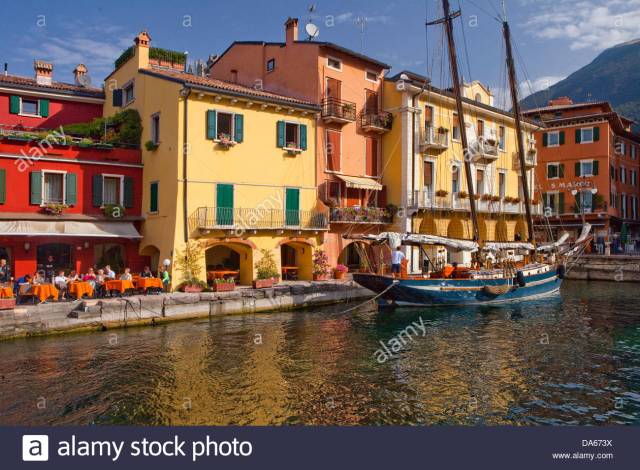
Reading The Invitation was another experience of time travel such as I’d enjoyed with Anton DiSclafani’s The After Party. But on this round the time warp was vicarious. Lucy Foley’s book reminded me so much of another that affected me hugely as a teenager, Lawrence Durrell’s Justine, which some sixty years ago introduced my boyish imagination to a fictional world of incredible sophistication. The parallels are remarkable. In both an expatriate English writer exiled penuriously to a Mediterranean city has a passionate relationship with the beautiful wife of a wealthy man, a woman whose background is a mystery. Their affair begins in an exotic ancient city, Alexandria in Justine, Rome for The Invitation. And in both cases the aftermath of their affair drives the Englishman to seek solitary refuge on the other side of the Med – a Greek island for Durrell, Morocco for Foley. So as I was currently reading The Invitation as a historical, my sixteen year old self was enjoying it as a contemporary, depicting a world he could only fantasize about ever experiencing. I did get to France and Italy a couple of years later, tho’ my adventures were rather tamer. Still, I’d seen enough for The Invitation to bring back some vivid memories, especially of Rome in the summer of ’60.
Some things didn’t seem quite true. Stella wouldn’t have been “jet-lagged” in Rome. Trans-Atlantic passenger aircraft were still powered by piston engines then (my first was in a DC-6 in 1958 – stopping in Shannon and Gander before reaching New York) and people like Mr & Mrs Truss would have travelled 1st-class on an ocean liner such as the Andria Doria anyway. Also, I doubt a water-ski craft would be built of teak. Too heavy. Again, as with The After Party, I paid much more attention to the evocation of time and place than I did to the artistic effects, so aesthetically this book is hard to rate, but I think I’ll hold at four stars. The subplot about the 16th-century Genoese sea captain seemed both awkward and pretentious. Some readers will surely like the ending, but I found it a bit tepid. All in all, tho’, Lucy Foley showed a real feeling for the setting & period and whether read for escape or nostalgia, this is a most pleasurable story. Fortunately I had both the audible and the ICPL hardcover, so could read episodes over again. But I must give kudos to Emma Gregory for her narration. In general she narrated in Posh English dialect, but I was so agreeably surprised by the voice she gave Stella. English readers so often give American characters a really nasal ugly generic American accent, but Stella sounded both ingenuous and melodious, tho’ quite authentic, with the sort of voice we would dream of for an American beauty of the period.
Review of Never Alone, by Elizabeth Haynes

For Elizabeth Haynes, merely to be very good is below standard for her because she ranks for me @ the very top level alongside Tana French & Sharon Bolton. Tho’ she lacks French’s genius @ executing plot & Bolton’s extraordinary fertility of invention, Haynes excels @ creating characters so appealing & engaging that you want them to be your closest friends & would cheerfully & enthusiastically kill to rescue them – Cathy in Into the Darkest Corner, Genevieve in Revenge of the Tide & especially Scarlett in Behind Closed Doors. But tho’ Sarah in this book is quite likeable, she never engaged my affections & appeareded but to bumble & muddle through. She seems very passive, but tho’ passivity characterised Cathy – as well as Annabel in Human Remains – I didn’t care for Sarah as much, perhaps because she is older, a widow, so I’d expect her to be more mature & capable, particularly in her personal relationships. A strong woman should have seen off the villain in the story tout de suite. I liked her daughter Kitty, but she had but a small part. Son Louis I found an inexcusable boor, despite probably being an Asperger’s sufferer. Aiden was a difficult character, as throughout the book we are supposed to find him ambiguous. What I did not find ambiguous was his profession. By my standards, if your business is giving others sexual pleasure, you are a worker in the sex trade, regardless of what parts of your body you use to practise your metier. Granted, many would disdain Genevieve’s role as a pole dancer, but she exemplifies athleticism, grace, & beauty, as well as facing real danger. Most importantly, Genevieve has a boat to maintain, a beautiful boat even if it is a stinkpot – it’s a classic wooden stinkpot. Aiden hasn’t a similarly worthy cause. But there was a pleasant surprise amongst the minor characters. In the hands of most other writers, Sarah’s friends Sophie & George would have simply been an exurban airhead society dame & a sleazy MP. That Elizabeth Haynes develops them so sympathetically displays that insight that makes her one of the very best contemporary authors, even when she is not @ the top of her game.
 billkupersmith